
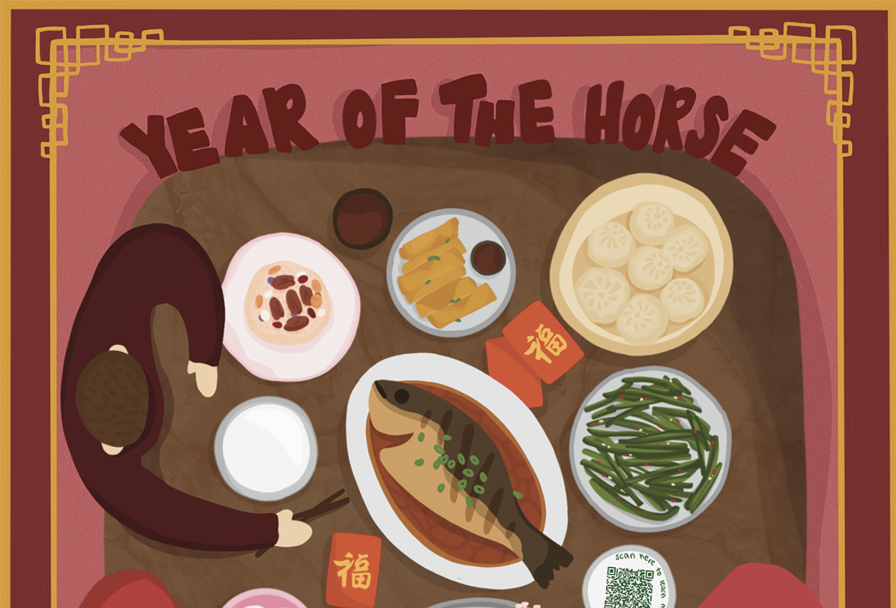
It’s official: We’ve entered the Year of the Horse! Chinese New Year is full of bonding moments, cultural sharing, and most importantly, great food. Now — more than ever — it’s important to honor the immigrant culture and customs that millions of people celebrate worldwide. For our Volume 14 Issue 3 poster, C Magazine is spotlighting a few of our favorite Chinese New Year food essentials.
Xiao Long Bao (小笼包)

Originating in late 19th-century Shanghai, Chinese soup dumplings are a staple in countless Asian meals for their delicate skin, savory beef filling, and rich broth packed within. These scrumptious dumplings are often eaten from bamboo steamers by first placing the dumpling in a spoon, poking a small hole to sip the broth, then eating the dumpling in one satisfying bite!
Steamed fish(清蒸鱼)

While fish is a common food found in many cultures, eating fish on Chinese New Year is especially symbolic. By representing abundance, wealth, and good fortune, eating steamed fish during a Chinese New Year dinner has long been a mandatory custom to bring good luck and good food into the new year.

Eight Treasure Rice(八宝饭)
This traditional Chinese dessert made from sweetened sticky rice and a myriad of candied fruits, red bean paste filling, nuts,and seeds never fails to bring a homey, nostalgic sweet treat to our tables during our New Year’s Eve dinner. Symbolizing good fortune and communion through the “united” nature of sticker rice, this festive dish is especially fitting to eat as we kick off the Year of the Horse.
Green Beans(干煸四季豆)
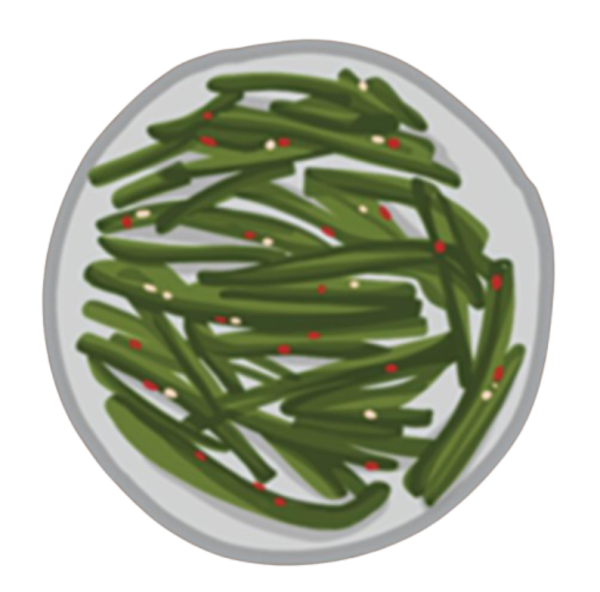 Chinese green beans are a well-known savory dish with stir-fried, smoky green beans, packing in a pop of flavor with each bite. Some popular ways to season these charred green beans include using garlic, chili oil, or sweet and savory sauce — a perfect side dish to complement the rest of the food on the dinner table.

Spring Rolls(春卷)
These crispy, fried appetizers stuffed with vegetables or meat are the perfect way to welcome the New Year and start off your feast! Spring rolls, traditionally made to celebrate the arrival of spring using fresh, in-season vegetables after Winter, symbolize wealth and prosperity through their golden skin.
Beijing-style Duck (北京烤鸭)
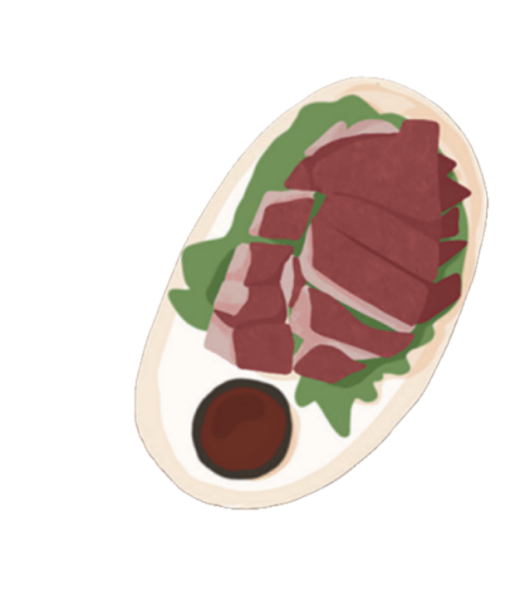 Also known as Peking Duck, this dish has its origins in the imperial-era. This dish is an elevated version of the crispy duck sold by street vendors. It is usually served with dark tianmian sauce, laid with slices of leek and cucumber in thin pancakes.
Hotpot (火锅)
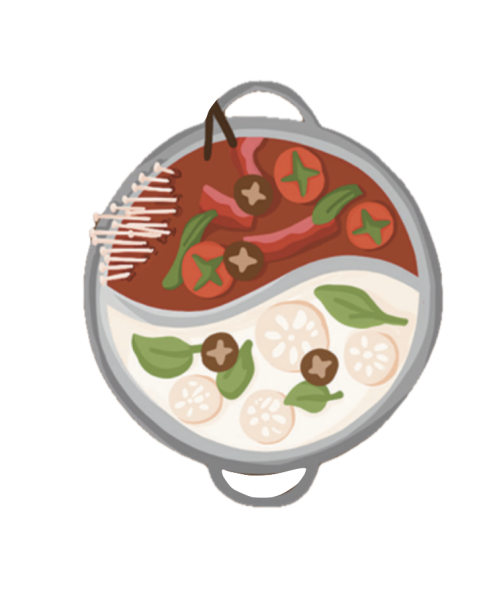 Hotpot is a staple of Chinese cuisine today, and often shared as a communal dish during celebrations and special occasions. The flavors of hotpot can range from spicy “mala” styles to mild mushroom soup. Hundreds of different ingredients are able to be cooked in this dish, making it the perfect customizable meal for gatherings.
Dumplings (饺子)

Especially common during Chinese New Year, dumplings are one of the most iconic parts of celebrating a Chinese holiday. Common fillings include ground meat, vegetables, chives, and cabbage. The art of folding dumplings has evolved throughout the ages and is still a bonding activity for many Chinese families today.
Wontons (馄饨)
Originating in northern China, wontons are a key part of Cantonese cuisine. They have thin square wrappers and are usually served in soup. Wontons are an essential comfort food on a cold day.
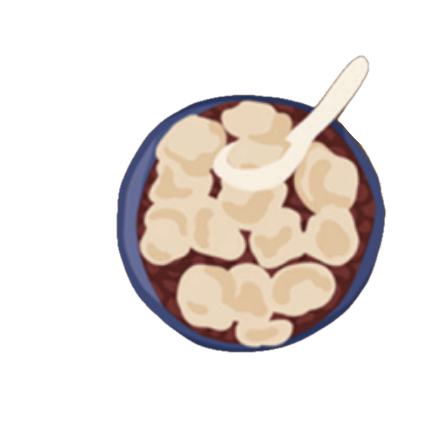
Mochi (汤圆)
 Tangyuan, or Chinese mochi, is a chewy rice snack that is usually filled with sesame, peanuts, coconut flakes, or red bean. It is made out of rice flour and steamed until it is soft. The mochi is served in a sweet or savory broth and it is a common dessert during festivals.