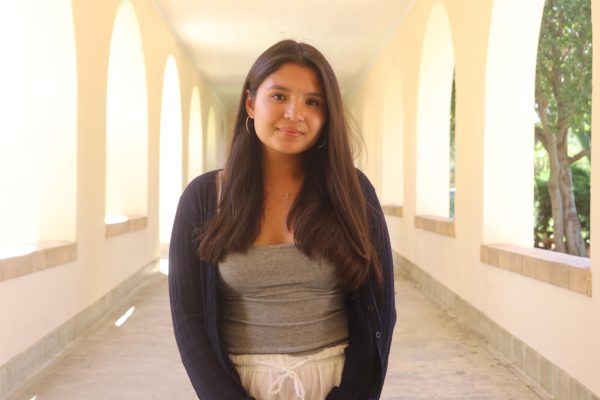

As junior Juni Thurston plugs her mini keyboard into her computer, she is immediately transported to her creative space. With her lights dimmed and headphones on, Thurston is ready to record.
From Kendrick Lamar to Travis Scott, rap has become one of the most popular genres worldwide, with over 1.85 billion listeners, according to HeadphonesAddict. However, most people are not familiar with the depth the genre offers. Smaller artists’ music is often not suggested by music algorithms without already listening, and this music is not played on the radio. These artists are also very hard to discover without being very into the genre they are in beforehand. In a world where news and media are usually hyper-focused on mainstream or most popular artists, these artists become even harder to discover. Yet, with the prevalence of discovering music online and through social media, more and more people have been introduced to the concept of “underground rap,” a scene of hip-hop filled with many lesser-known artists who create diverse, original pieces.
There are countless underground rap genres, but some of the most commonly associated with the underground are U.K.-based rap and rage. Among students, music tastes and preferences inevitably vary from person to person. Junior Harry Bittinger tends to listen to more U.K. rap and rage, an energetic microgenre of trap music known for its high energy, heavy synths and bass.
“I’m a big fan of artists like Feng, PureSnow, fakemink, blimeydog and Devon Hendryx,” Bittinger said.
Feng, PureSnow, fakemink and blimeydog are some of the most notable underground rappers from the U.K. Devon Hendryx, now known as JPEGMAFIA, is known for his experimental hip-hop and wide range of music.
Other Paly students prefer artists that create more classic lyrical rap, such as junior Yotam Rachman, who listens to Baby Stone Gorillas and Big Sad 1900.
Amid the rage genre, some of the most popular artists include OsamaSon, Che and Nettspend, according to senior Ricky Cabrera. All three have over 1 million monthly listeners, each being renowned for their maximalist and boundary-pushing sounds. Despite their large number of listeners, they are still considered underground due to a lack of mainstream exposure.
On the internet, there are many definitions of what “underground rap” really is. Many people have different ideas of what the term underground rap entails, and Bittinger has his own interpretation of the term — opting to classify it as a group, not a singular genre.
“Overall, the genre is pretty broad, and I don’t think any one person can define it,” Bittinger said. “To me, though, I’ve always been really attracted to how it connects more established elements of hip-hop and pulls from other genres, like hyperpop and electronic.”
The muddy definition is also partly due to debate over what numbers constitute an artist being “underground,” although underground rappers tend to have a smaller community of listeners.
“I would say [underground] artists probably [have] under 50,000 monthly listeners, but I think that [number] can vary a lot between people,” Rachman said.
Underground rap tends to be famous for its very diverse and niche sound, rendering it quite distinguishable from more mainstream music, which is one of the reasons why freshman Marissa Fusimalohi gravitates towards this genre. For example, fakemink is constantly inventing sounds by making music that he calls “luxury rap,” which contrasts high-end artistic elements with gritty and raw production.
“I think mainstream rap is more based on what everyone else likes, not what they feel is right,” Fusimalohi said.
Because underground rap is much more specific and is usually not made to appeal to mass audiences, it often takes time to get used to the sound.
“You may not understand [the music] all the time, and you may have to train yourself to listen to it,” Cabrera said. “A lot of the time [the artists] go off beat on purpose, or they use more extravagant kinds of sounds that you won’t hear from just regular music.”
These original sounds and lyrics are often shaped by the background of the artist or what they grew up listening to. In an interview with Complex News, artist OsamaSon listed popular rap artists Playboi Carti, Lil Uzi Vert, NBA Youngboy and Chief Keef as big inspirations for both him and his music.
Expression is a big part of music in general; artists often share their thoughts and experiences in songs through storytelling and the atmosphere they create. Thurston has noticed that this factor also allows these artists to be more experimental with their work.
“Most underground artists are not going to be making a living off of their music,” Thurston said. “Because of that, there’s a lot less fear of experimenting and trying out new things, because there isn’t the possibility of losing income if fans won’t like whatever they put out. [Mainstream artists] have more expectations and more pressure, and oftentimes that can push artists to make their music more palatable.”
Moreover, underground artists tend to have fewer constraints when it comes to what they can make, making them feel more comfortable trying new things.
“Resources are also a big part of that differentiation [between mainstream and underground rap],” Thurston said. “Out of all genres, underground typically is the place where a lot more experimentation happens. It often comes out of not having certain resources and having to use whatever production tools are necessary to make that work.”
In a way, fewer resources sometimes offer artists a certain freedom that pushes them to try new things. For example, Kentucky-based underground artist Neveah Smith, known online as Heavn0nevaeh, creates experimental electronic and rap music. Her music, also sometimes known as sound collage music, has been shaped by how she was raised and where she grew up, which many artists may be able to relate to. The hardships she’s had to overcome wind up as motifs and inspirations in her music.
“The creative ability in the working class, [which are] the type of people who are usually making this underground music, is just objectively better,” Smith said. “We’ve been through more as a working class, and a lot of people in the underground music scene also have. It builds lore; it builds character.”
Not only do the stories of these artists impact their music, but the community that surrounds them does as well. Within different genres of the underground, each artist often has their own subgenre. However, artists are often categorized into different unique sounds of these subgenres, heavily influenced by their “areas” of the underground and who they take influence from.
“[Artists] usually stay in their little circles, like areas of the underground,” Smith said. “There definitely are different little micro scenes within the scene that you can tap into, you can hear the influences within those scenes. And a lot of it does have to do with where you live.”
These nuances and special aspects of underground music attract devoted listeners, such as senior Millie Reiter.
“I love how each artist has a unique sound and style, and how it is really easy to discover more artists with different styles,” Reiter said. “I also really love that concert tickets for these artists are rarely very expensive, which makes it much easier to see so many of my favorite creators in person.”
Not only are these concerts cheaper than more mainstream ones, but they are also a completely distinctive experience. While a smaller fanbase may give the impression that an artist has less dedicated supporters, this is often not the case. Instead, most of the people who attend these concerts are diehard fans, creating a unique energy at these concerts.
“[OsamaSon’s concert] was a lot better than the videos [of concerts online] because you get to actually feel the energy and all the people there,” Cabrera said. “It’s cool being in an environment with people who listen to the same things.”
While this genre of music is very enjoyable for its listeners, it is also attractive for artists who want to express themselves. Thurston’s experience creating music has made her more aware of both her creative process and who she is as a person.
“I’ve always been a person that has music playing in my head all the time in one way or another, [whether] just some random beat or some song I recently heard,” Thurston said. “I think that gives me a lot of ideas on random things that I could create and kind of bring to be something more tangible.”
Through this focus, Thurston discovered a love for creating beats. While she is not an underground rapper herself, Thurston produces music on Spotify under the name of JVNLIII, where she collaborates and creates beats that bridge different genres together.
“I formed the electronic sound that I’ve been producing for a while now and transformed that into something that can work better with rap and hip hop,” Thurston said.
For Thurston, all it takes to start is an idea.
“My process starts with some musical motif or something in my head that I then am lucky enough to have synthesizers, digital production tools, FL Studio and all these things to help turn the idea into music that can be published,” Thurston said.
For other artists, they take a lot of influence from their friends.
“If I’m [going to] rap, I’m probably going to hop on one of my friends’ songs or one of my friends’ beats because they’re amazing producers,” Smith said. “A lot of my inspiration has come from my friends. My friends are awesome. … [They] have this passion and [they] follow it.
However, building up one’s skills in order to collaborate and create quality art requires years of hard work, not just raw talent.
“I started making music in seventh grade,” Thurston said. “Over the past years, I’ve helped build up the skills to be able to turn those ideas that I have into not only something tangible, but something that people can actually enjoy.”
For anyone looking to start creating music, all it takes is just starting, recommends audio production teacher Michael Najar.
“[The most important thing is] hitting the record button and not being afraid of judgment,” Najar said. “We all want to create. What we’re mostly worried about is this fear of judgment, especially [among] teenagers. The few people whom I know on this campus who produce things are not afraid of people judging them. Or, they are afraid of it, but they get past it.”
Many artists who are looking to start creating turn towards social media as a great way to get themselves exposed to an audience. Smith, for example, has gone viral on social media for videos explaining the process behind creating music, which has ultimately helped her attract a larger audience of listeners.
“I think social media is already the main way people discover underground music, especially rap,” Reiter said. “Putting a song from an underground artist over an Instagram post or using underground music for a TikTok gives this music more exposure and lets more people discover it.”
Artists often publicize their work through social media to open their audiences and make connections. Once their music has been created, a lot of artists use smaller streaming platforms such as SoundCloud to publish their work.
“[SoundCloud] is where a lot of rappers that are now mainstream started out, like Lil Peep and XXXTentacion,” Thurston said. “I think that’s still a really prominent place where underground rappers put out their stuff.”
Due to the plethora of undiscovered music by small artists, these platforms are also a popular way for listeners to discover new artists.
“[I discover artists] on SoundCloud or just on Apple Music, when they just continue playing random artists I might like [on queue],” Cabrera said. “I’ll just add them to the playlist, and I’ll start looking into more music from them.”
Beyond social media and streaming platforms, there are many other ways to discover different rappers. Fashion and style are other factors that often draw people into the genre.
“I got into a lot of artists producing stuff adjacent to those sounds because of how tied they are to fashion, specifically avant-garde Rick Owens type stuff,” Bittinger said.
Many underground artists are known for their use of archive fashion, wearing rare designer pieces from past collections. Some of the most common designers worn include brands like Rick Owens, Balenciaga, Christian Dior, Yves Saint Laurent, Maison Margiela and Raf Simons. People can often be drawn in by these artists’ style and aesthetic as a result. This style is especially prevalent in rage and U.K. artists, often categorized with dark undertones and exotic pieces.
While Bittinger favors the new, more experimental side of the underground scene, others gravitate towards artists who live closer to them. Fusimalohi, who listens to Lil Pete, Lou Deezi and David Rhythm, artists emblematic of the hip-hop and reggae genres, prefers music by more local artists because she feels a more personal connection to them and their music.
“They’re all from the Bay [Area],” Fusimalohi said. “I kind of resonate with them. They all grew up in the same place where I grew up, too.”
Others may also choose to listen to artists who live closer to them to support their community and their friends.
“It’s a good idea to look at smaller artists and perhaps look into your local community of musicians,” Thurston said. “If you hear an artist or a song that you like, look more into the artists [and] see what connections are there.”
While underground rap may not be everyone’s cup of tea, music is an extremely big part of many individuals’ lives, no matter the genre.
“I think people should listen to music, not just underground rap,” Najar said. “It’s a key to unlocking a part of our emotional and human experience. The way we interpret the world is through art. If that art is through rap or singing or whatever, you gotta go find it.”
While it may be easier to gravitate towards more mainstream art, finding underground artists can be just as rewarding, if not more, for many.
“Supporting small artists and people who are working to create art is always going to be a good thing,” Thurston said. “A lot of times it’s just easier and more accessible to listen to what’s given to you by Spotify recommendations and the radio or just what’s popular. I just think that underground music broadly has a bunch of great sounds that a bunch of people would like, but they just haven’t heard it yet.”