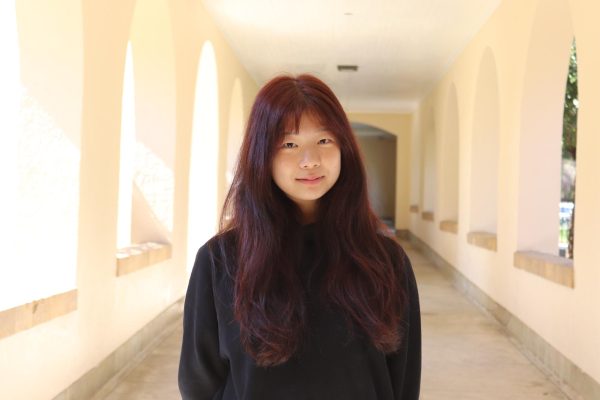
As Paly junior Mirai Matsuzawa took her seat and glimpsed the many sheets of color draped over a nearby chair, she was skeptical about how legitimate this whole practice would be. Matsuzawa had seen advertisements for color analysis during her vacation in Korea, and after noticing it pop up on her social media,, she and her mom decided to give it a try towards the end of their trip.
“We had heard a lot about it [color analysis], so we wanted to see what it was about,” Matsuzawa said.
She is one of many who have partaken in the viral color analysis trend, which has taken the internet by storm in recent years. People go to specialized salons and meet with a color analysis professional to discover what colors best suit their undertone, eye color, hair color, and more by holding several pantones close to their face. Despite its popularity, it’s difficult to pinpoint what it is about the practice that is so enticing for those who engage with it. Additionally, is the science behind it actually factual, or is it just an internet scam?
Juana Franklin, a stylist for House of Color located in Castaic, California, personally believes color analysis to be a legitimate practice.
“[Color analysis] is 100 percent scientific,” Franklin said. “Everyone can see it. As I am giving the analysis, the client is seeing it too.”
Franklin works as a stylist, helping others find their seasons and palettes through individual sessions. Color analysis works through four main seasons, each of which has distinct color palettes. Adherents believe they suit different people based on their undertones and individual features. Fall, winter, spring, and summer are divided into sectors such as bright, cool, dark, warm, light, and soft. Franklin came across color analysis at a time when she was struggling to find her personal style — long before the topic appeared on social media.
“I heard about color analysis in the 80’s, and I guessed my season based on a book I found back then,” Franklin said. “But [later on], I was having a lot of trouble with my closet, so I decided to have my colors analyzed to see what looked best on me. Turns out I chose the wrong season and lived in it for many years. When I tried to put the colors [in my season] on, I felt more vibrant and more alive.”
While many have only recently discovered color analysis through social media, the concept has existed for many decades.
“Color analysis goes back to the early days and is based on the work of Johannes Itten and the Bauhaus School of Art,” Franklin said. “Artists like Monet and Picasso apparently painted in their individual seasons. Whether they knew it or not, I’m not sure.”
Through her work with clients, Franklin has noticed that most people see a visible difference when looking at themselves next to different colors.
“Most clients see the difference when you point it out,” Franklin said. “People want to look their best. Most people who ask for an analysis want a change and will follow their colors.”
Franklin believes that color analysis is more than just a social media trend and can be used positively rather than as a way to fall victim to beauty standards.
“Advertising and social media campaigns push people to want to look a certain way,” Franklin said. “Color analysis is considered a health and wellness brand for its ability to boost confidence.”
However, some people, such as Matsuzawa, discovered color analysis because of social media and found it to be a positive experience. In her session, she was told that certain tones of makeup and jewelry might suit her complexion more than others.
“[The Color Analyst] went super in-depth about everything, from what colors to wear to what hair color, jewelry, and what kind of makeup looks good on [me],” Matsuzawa said.
While a few previous assumptions on her color palette were affirmed, other results proved surprising for Matsuzawa.
“Some of [the color analysis] confirmed a lot of what I had already thought about myself, like how gold jewelry or darker hair tones [were a good look],” Matsuzawa said. “But when it came to what colors are best to wear, I was honestly a little surprised, because the colors it recommended for my skin tone or what would look best on me were different from the colors I liked wearing.”
Despite the contrast between her recommended and preferred colors, Matsuzawa did not feel limited in her fashion choices.
“After I got the color analysis done, I chose to listen to half of what it said,” Matsuzawa said.“ It was a good tool and definitely has helped influence when I’m choosing what to wear, but if I didn’t agree with some of the results, I chose not to listen.”
Ultimately, the color analysis had a lasting influence on Matsuzawa and her closet.
“That summer when I was shopping for back to school clothes and I was choosing a color for a specific top, I would look back at my color sheet and think, ‘This [color] would probably bring out this feature more’,” Matsuzawa said.
When it comes to meshing colors together and deciding what looks “good,” artists are well-versed in the subject. Paly junior Ray Wong, an experienced artist who has gained expertise in many mediums from oil painting to photography, believes colors can look better on a particular set of features, similarly to the opinion of color analysis experts.
“Choosing colors that match or contrast with a person’s undertone is an important part of creating a believable and emotive piece,” Wong said.
However, Wong decides what colors to use in a more organic way than is typical for color analysts.
“I usually choose my color palette as I progress with the piece,” Wong said. “It develops naturally along with my ideas and drafts.”
For Wong, color combinations are often more complex than just pairing colors together.
“I like using teal and red [and] blue and yellow,” Wong said. “Complementary colors always create strong visual energy when paired well.”
But, it isn’t only about hue. Factors such as tone, brightness and saturation shape how those colors behave.
“Adjusting brightness and saturation can completely change the mood and balance,” Wong said.
However, Wong doesn’t agree with the system of “seasonal” labels that color analysts are known for using.
“It can be limiting,” Wong said. “Exploring your own color palette and developing your personal sense of color is what truly matters. Art should feel free, not boxed into preset categories.”
Paly senior Karen Artola, a digital and traditional artist who has established an online presence to showcase her work, said that color theory largely contributes to her creative process.
“It encompasses different types of color palettes like complementary, analogous, tertiary and monochromatic color context, which is the relative hue of a color against another hue, saturation, and more,” Artola said. “Tints are how light a color is, while shades are how dark a color is.”
Similar to Wong, Artola believes that categorizing colors the way color analysts tend to do might unnecessarily restrict her creative process.
“[The use of categories] can often be redundant,” Artola said. “There are so many hues, shades, and tints that we wouldn’t be able to categorize them all.”
However, contrary to what Wong believes, Artola disagrees with the idea that colors can compliment certain skin colors more than others.
“I don’t believe the skin tones [I use in my art] make much of a difference,” Artola said. “When objects are placed near each other, they reflect light onto the other. When a color is placed next to the skin, it’ll take on a bit of that color anyway. Color is very relative.”
Given that factors such as lighting and placement significantly impact how a color appears in a given moment, it’s difficult to understand how color analysts build confidence in their advice’s accuracy. Paly sophomore and artist Kamila Larios shares that since color can be manipulated in so many different ways, people should feel free to experiment with it however they wish.
“I think that everyone should be able to explore color freely and use whatever style they want on their pieces so each one has their own individuality,” Larios said.
While some people don’t see the benefit in categorizing colors, others find color analysis a helpful guide when exploring their personal style. Either way, color analysis has made a noticeable impact on social media and self-expression, and people can choose to interact with it in whatever way they desire. In Larios’s eyes, people shouldn’t shy away from being expressive and dressing however they wish solely because of what society deems “good-looking.”
“I definitely think colors can look different on different skin tones or features,” Larios said. “But I also think people should be able to wear whatever they want.”