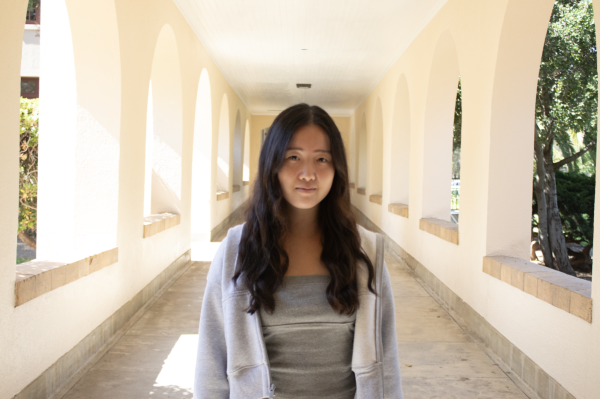

Charlotta Hauksdóttir is an award winning visual artist who incorporates photography, collage and mixed media in her work, inspired by her home country Iceland.
Q: Your art has grown and evolved over the years, but what drew you to photography and collage as your primary mediums?
A: I just wanted to do something interesting with my life. I didn’t want a nine-to-five job, and I wanted to travel. I decided to study industrial photography, commercial advertisement and studio photography. I really didn’t like that, and my photography style evolved in its own way. Earning my Master of Fine Arts was quite a process for transitioning from the commercial aspect into fine art.
My collages also have a lot to do with my memory and my memory loss. I have epilepsy, so I get memory flashes and missing memories that influenced the collage aspect of my work.
Q: How does your Icelandic heritage influence your artistic vision?
A: After moving to California, I realized how much I was missing Iceland. Iceland is kind of weird in that it’s an isolated island. You can’t wait to get away when you get older, but as soon as you get away, you find out that you miss it. People from Iceland have really strong roots to the country. People I know who have been [in California] for 40 to 50 years go back home to [Iceland] in their 80s. When I moved here in 2021 and went to get my Master’s in Photography, I found how connected I was to Iceland and started photographing mostly there with the landscape.
Q: Your art conveys the concept of memory. Can you describe the role memory plays in your work, particularly in how you translate these emotions into visual art?
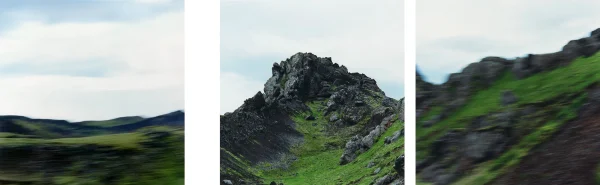
A: In my early landscape work “Dreamscapes,” I was photographing and cutting up the moving images [into] diptychs and triptychs. The idea of moving the photograph is that the landscape is flying by. You’re not able to comprehend or really remember it. The gaps between the photographs are gaps in memory. You want to stay in the landscape, but you’re never fully going to experience it.
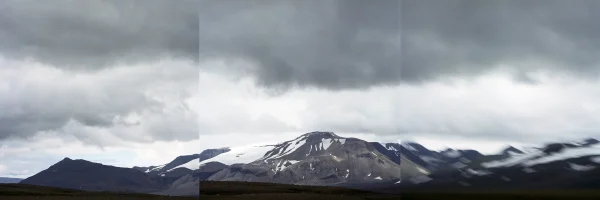
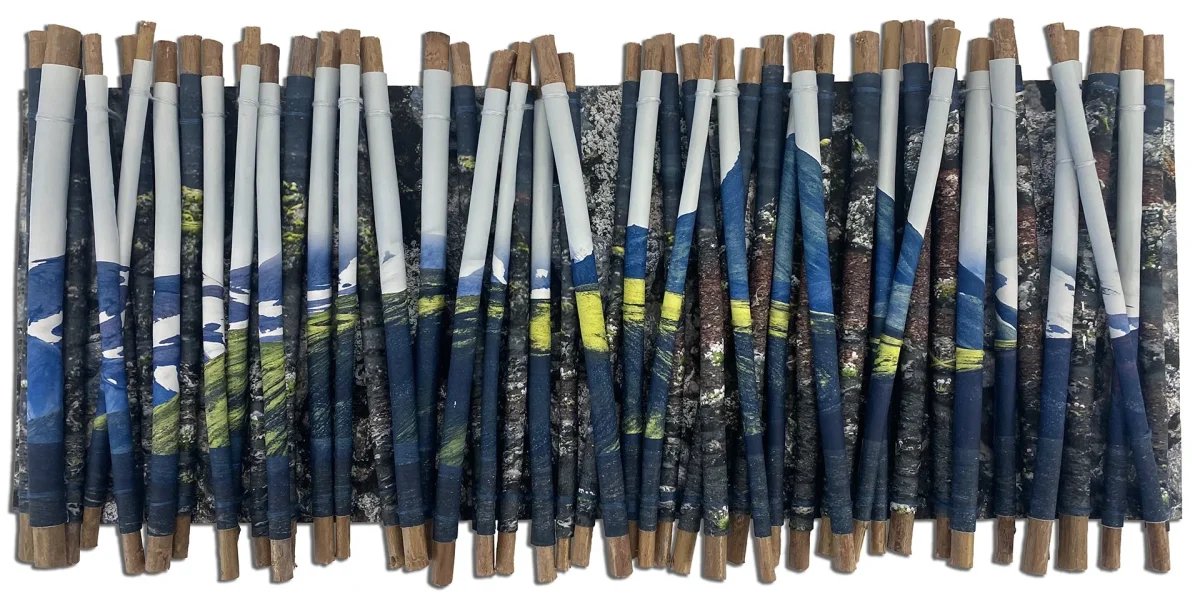
Then, I started doing the vertical landscapes for “Reclamation.” That was the idea of memory and place. There are vertical human scale pieces that I combined. It doesn’t represent the whole. It was taken in multiple places in that location, and then I sewed them together so they would flow together but still have that break that represents the gaps in memory. The idea of creating this was also the idea of being transported into those spaces, instead of just the landscape passing you by.
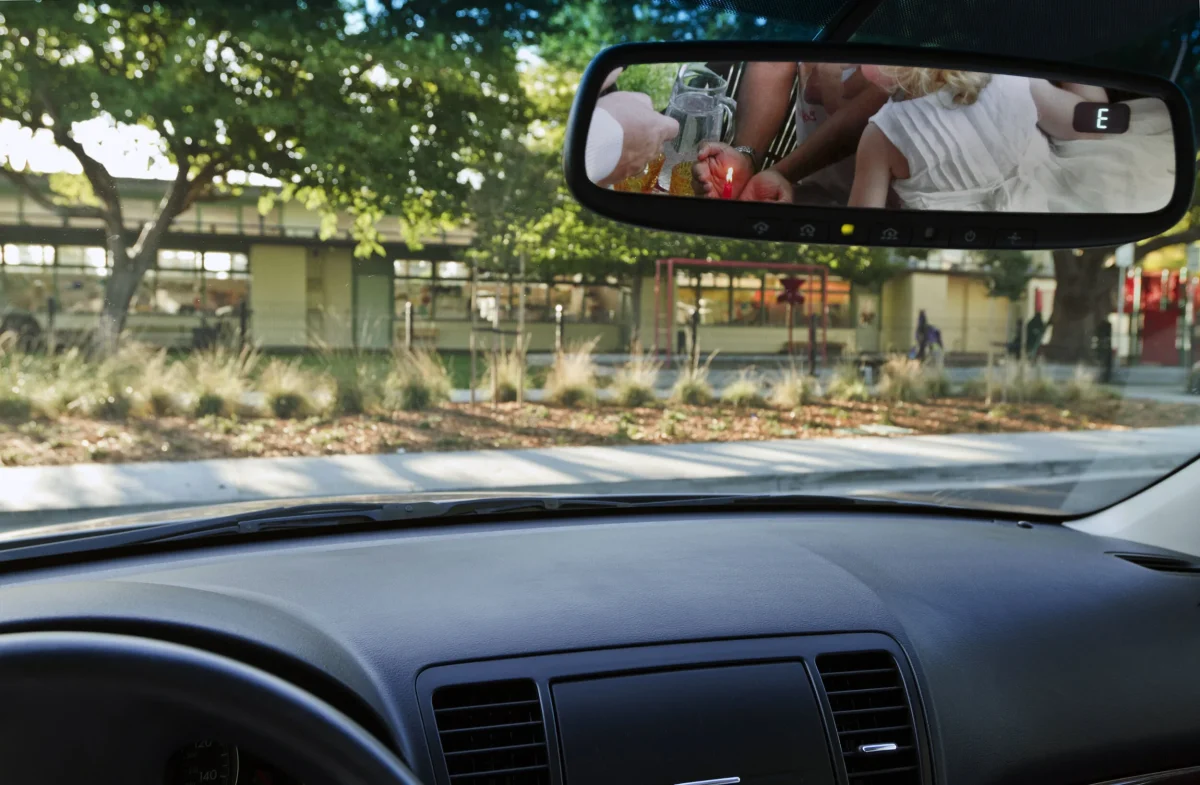
For my project “For an Instant Time Stood Still,” I printed photographs from some time and place, attached them to a cardboard, held them in front of the mirror in the car and stopped the car in a location that I felt connected to the image. I was in that stationary car heading towards the future, but looking back at the past.
Q: What are the decisions you choose to incorporate into your art, to make a commentary on climate change?
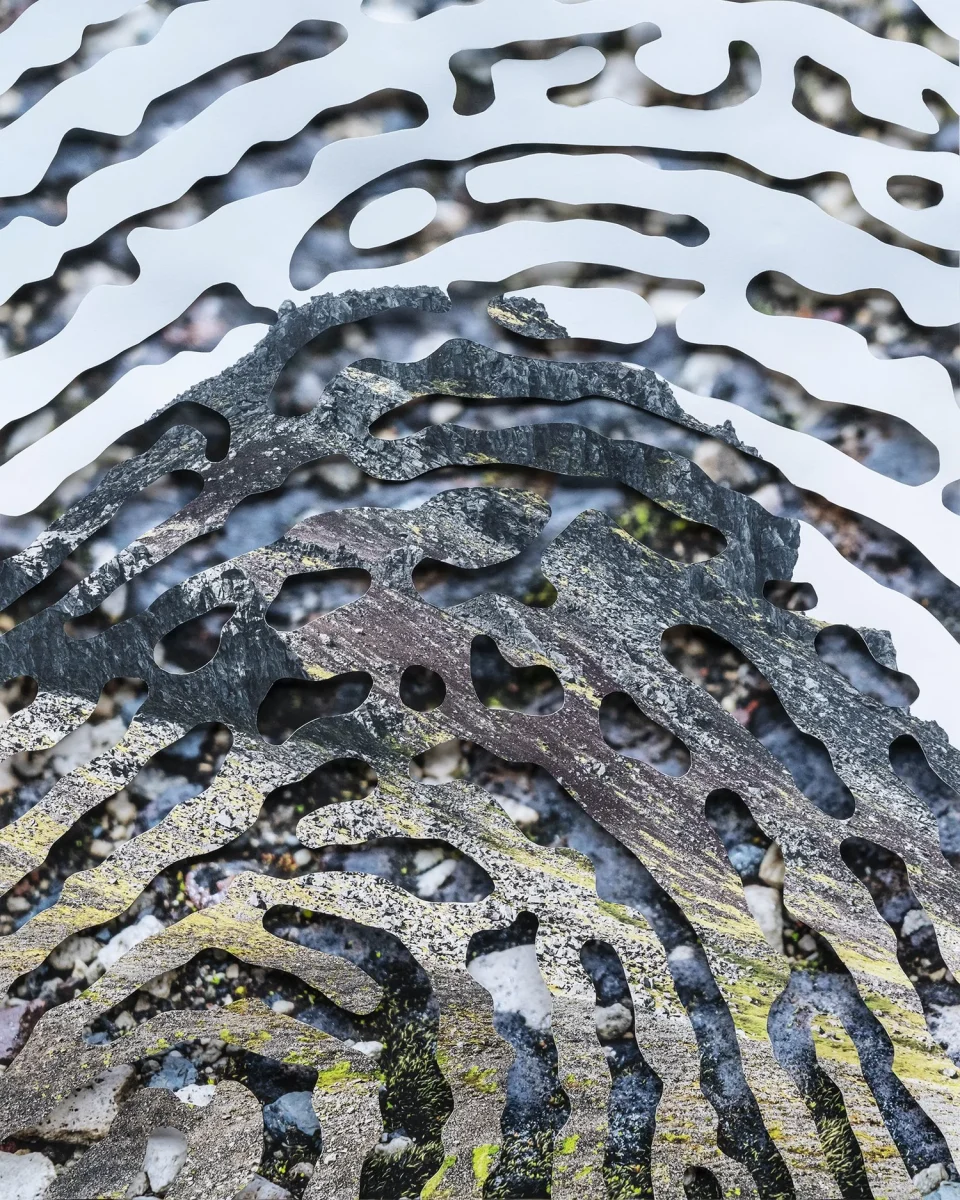
A: My most recent series “Impressions” is more about climate change and our connection to the landscape. There are all those cut up pieces in a fingerprint pattern that are missing. There are these gaps in memories, which are represented in the cutouts, too. I started seeing not only our connection with nature, with the fingerprint showing our impression on nature, but also the missing parts, and it evolved from there.
Q: What message are you hoping to convey through the themes in your artworks?
A: I want to raise awareness about climate change. You see bits cut out of the landscape, experience the loss or start thinking more about the loss. The thing with art is that you have to make it from the heart, your perspective and interests. I can’t control how they perceive the work. It’s just about what I want to convey, and hopefully, people are going to resonate with it.