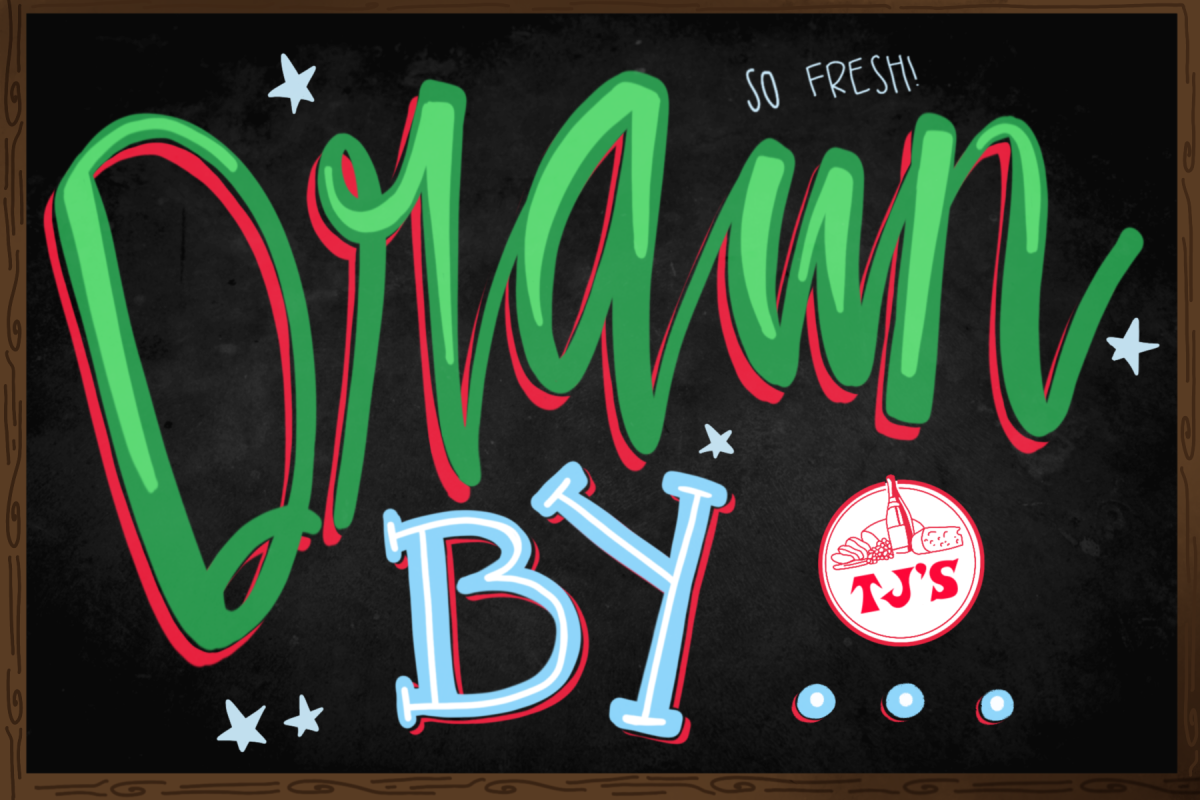
Loopy script fonts are accompanied by vibrant color palettes and hand-painted illustrations on the blackboards of Trader Joe’s, representing unique items ranging from the Freeze Dried Strawberry Pieces to the Ketchup Flavored Lattice Potato chips. Vibrant pinks, blues, and greens light up the entire storefront with fun graphics and diverse visuals.
These signs have long been an integral part of every store. On the surface, they seem to primarily help advertise new products and describe product details. However, as they decorate the window storefronts and accessorize the shelves, these signs can actually have multiple functions — influencing what customers are drawn to, especially for students who frequent Trader Joe’s between classes.
Sign artist Carmen Churchill has worked as a Trader Joe’s employee in Portland, Ore., since 2023. When she initially started, however, the path to becoming a sign artist wasn’t always clear.
“It took almost a year for me to get on the art team at Trader Joe’s,” Churchill said. “I told my managers I was interested in art, and they let me practice with a few signs here and there, but it was never official … When a spot opened up at my new store [in Portland], they offered me the position.”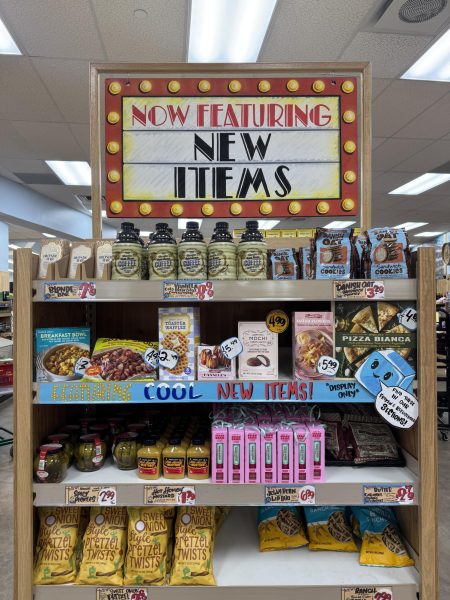
For Trader Joe’s sign artist and former Disney artist Jason Maloney, who is based in Edmond, Okla., most design inspiration and color palettes for each sign come from the product’s packaging or the sign’s theme.
“I went with a cool western theme for some ranch seasoned cashews,” Maloney said. “They really give us a lot of room to flex our creativity as long as the price is very big, the title of the product is easy to read and there is a clear tag line written somewhere on the sign.”
An alternative route for sourcing design ideas is through searching social media.
“I get a lot of inspiration from other artists I follow on Instagram or TikTok,” Churchill said. “If the packaging is cute on a product, I often will borrow elements to use as well. If I’m really in a slump for inspiration, Pinterest is great.”
Churchill first sketches a design with chalk, then uses an extra large tipped POSCA white marker to fill in the large price and product title on a pre-painted black board. After drying each layer of color with a hairdryer and cleaning up linework with a black marker, Churchill brings her signs to life.
Each line, shape and color of the Trader Joe’s signs introduces an element of fun and creativity to the job as a Trader Joe’s employee.
“Some of the most fun signs I get to do are display boards,” Churchill said. “They go on the ends of the aisle at Trader Joe’s and are a few feet wide. My favorite display boards are general ones, where I can put a phrase and an image on it instead of just names of products and prices.”
Having a job as a sign artist can even have an impact on one’s life outside of their job. This job can push them to be more creative in their day-to-day life and practice artmaking, according to former Trader Joe’s sign artist Alexa Maldonado, who worked at Trader Joe’s from 2022 to 2024 in Long Island, N.Y.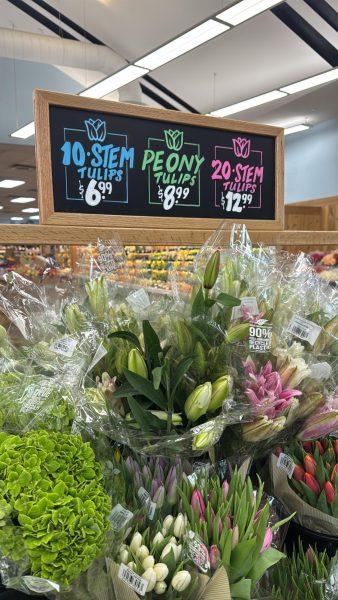
“I had never had a job where I could be creative,” Maldonado said. “That’s like the only job where I’ve had the opportunity. It was really awesome just being able to flex that muscle and express it. I miss it sometimes because that was one of the most creative times in my life.”
According to Churchill, the amount of time spent on each sign can vary from five minutes for shelf signs — the most basic form of sign that only requires artists to choose a template, write the product details and laminate it — to five hours for display signs. Oftentimes, artists can use these signs to discover their personal style and artistic preferences.
“Every sign artist has their own style and techniques they gravitate towards,” Churchill said. “I like bold, cartoonish fonts, while I’ve had coworkers who tend to use script or serif fonts more.”
The freedom of creativity when illustrating also gives artists an opportunity to express parts of their lived experiences and skills. For example, Maldonado often incorporated features of her personal background into her signs.
“I’m half Mexican, so I would look at Mexican sign art [for inspiration] because they have a really big sign painting culture there as well,” Maldonado said. “I would try to mimic the fonts in that style, and sometimes the colors, which were very bright. That’s how I would express my creativity, mostly with the colors and using fonts that maybe aren’t so common.”
Besides personal expression, these signs have become an immensely beneficial aspect of Trader Joe’s for both employees and customers. Bella Gertsch, senior and Trader Joe’s employee, said that these signs helped her get accustomed to the store itself.
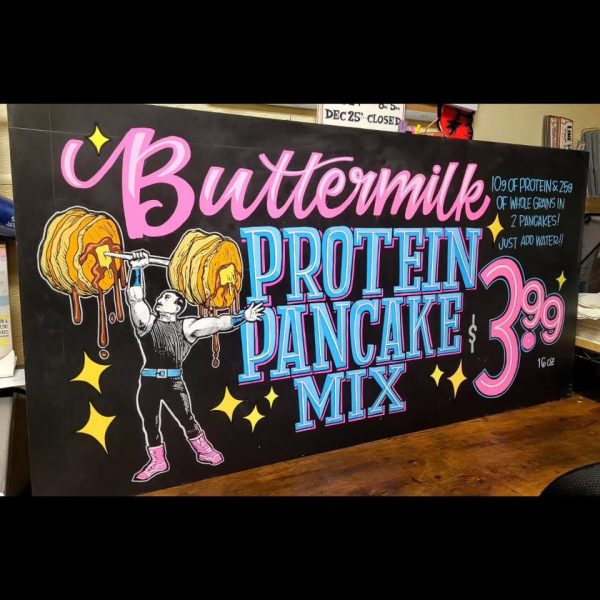
“The signs helped me remember, in the early days, which aisles were what,” Gertsch said.
“I’m a visual person and when I see a sign [with] the big numbers, like $3.99, I think ‘Oh, that’s a really good price. Trader Joe’s is the only store that I’ve been to that has these cute, artsy signs. If you go to any other Trader Joe’s, all the signs are different.”
Moreover, these signs have proven to be effective in marketing specific products and encouraging customers to buy products they would have otherwise overlooked.
“I had a coworker let me know a customer came up to tell them how great all the display boards looked in our store,” Churchill said. “The customer said she was an artist herself and just had to comment on how eye-catching they all were and [that] she probably bought something off of each one. It’s always nice to hear a compliment like this, as some days I’m not sure if anyone even notices the signs I make.”
These signs have become a staple in Trader Joe’s stores across the country. According to Paly economics teacher Eric Bloom, not only do they add personality to each store’s interior design, but they also play into strategic marketing tactics to increase customers and brand name recognition.
In fact, the decision to change these product signs every few weeks is intentional. According to Bloom, the signs prompt customers to be more attentive on what new foods the store has to offer.
“The idea of doing it was to periodically change it up to make people think about you,” Bloom said. “[Younger customers] will notice as [they] go in and think, ‘Oh, that’s funny. Last week they had this one, and now they’re changing it.’ That’s part of how a store gets you to put your foot into the store.”
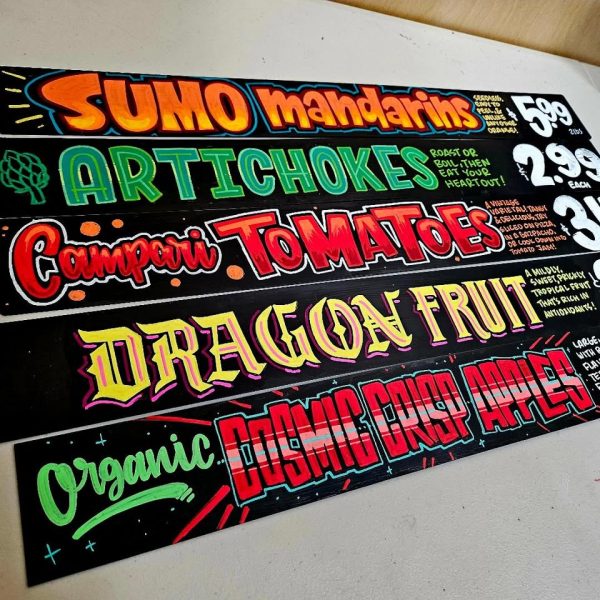
Signs at Trader Joe’s also help elevate the shopping experience by making a positive impression on their customers. They also contribute to the brand’s audience engagement, even resonating with customers.
“The customers love the signs we make, and they can’t believe that they are all hand-drawn in-house and not printed,” Maloney said. “Working at Trader Joe’s is really about customer experience, and creating hand-drawn signs is another way to connect to the customer and give them a ‘Wow!’ experience while shopping.”
Overall, it’s through these signs that give the brand its local, comforting and nostalgic personality — an element that is a uniquely crucial part of the Trader Joe’s brand.
“They [Trader Joe’s] can get you to think Trader Joe’s is interesting, valuable, tastes good [and] convenient,” Bloom said. “That is all part of the way that they’re trying to brand that they’re not a big corporate entity, even though they are. The signage is just one of the things that they try to do to signal to their customers that they are different, that they are unique and that they are local.”
While these signs help enhance Trader Joe’s marketing, they simultaneously serve another one of Trader Joe’s goals. Specifically, hand-drawn signs support the brand’s mission of keeping authentic, creative art across the nation.
“Trader Joe’s has always been a huge supporter of individuality within the team,” Maloney said. “They also love art and have hand drawn artwork all around their stores, wherever they are in the country.”
In a world of increasing technology usage and a push to computerize artwork, these handmade designs help preserve the art of whimsical, “made-with-love”, signmaking.
“I’m really happy that [sign painting] is a real job that exists,” Maldonado said. “Yes, you can use computers for it, but I really respect the fact that it’s handmade and it’s traditional media.”