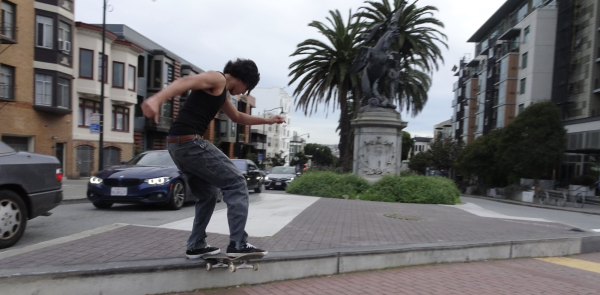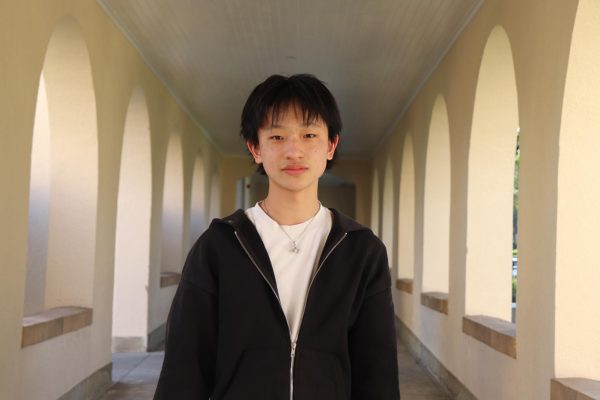
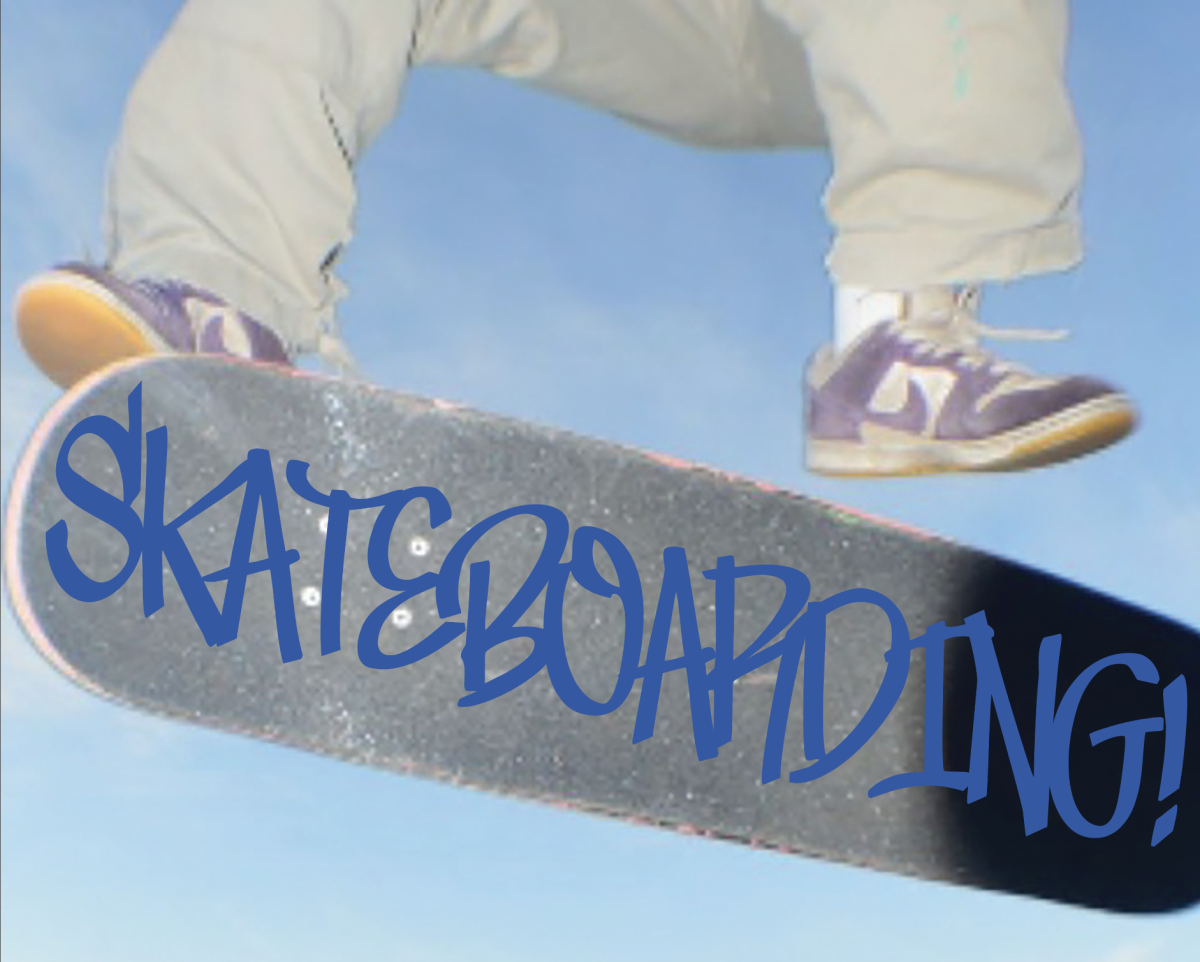
As senior Zachary Yen floats through the air, he expertly flips the skateboard underneath him to complete a Tre flip.
“Essentially, it’s two tricks: the board does one rotation and it flips underneath you, and it combines with a 360 [kickflip] where the board spins around itself,” Yen said.
As a native resident of Palo Alto who currently attends Northfield Mount Hermon High School in Massachusetts, Yen founded the Paly skateboarding club and started developing his skateboarding skills at eight years old. His passion began after crafting his own boards at woodworking classes at Young Builders in Midtown.
“I was always drawn to skateboarding,” Yen said. “’I’ve always loved things with wheels. I was quick to biking. I like building things as well, and seeing cool things to build.”
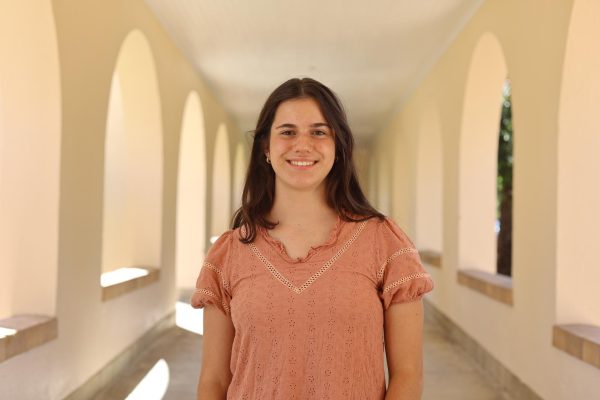
For most, such as junior Samanvika Senthil-Kumar, being gifted a skateboard jump-started their passion.
“I started skateboarding in the eighth grade when I got a skateboard for Christmas,” Senthil-Kumar said. “A lot of kids in my neighborhood skateboarded when I was young [and] I would see them doing all these tricks. I thought, ‘That’s really cool. I want to do that when I’m older.’ So I was like, ‘Why not just start now?’”
During Yen’s early skateboarding days, the community and people, particularly at Burgess skate park in Menlo Park, made him fall in love with the activity.
“I remember always seeing people skateboarding there and thinking ‘Oh, they’re so cool,’” Yen said. “I would go with my friends, but none of us knew how to skate, so we were just rolling around [on our skateboards].”
Despite Yen and his friends’ inexperience, older skaters showed Yen and his friends the ropes.
“Within five seconds of walking in, a couple of older kids came to me and said, ‘Dude, you want to learn how to skate?’” Yen said. “[I said] ‘I’d love to,’ and they showed me around. I’m still friends with those guys today.”
The collaborative, mentoring nature of skateboarding was distinct to Yen’s previous experience with athletics.
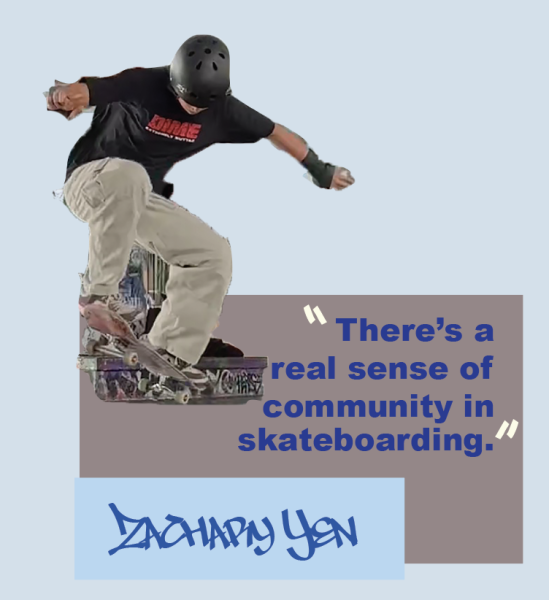
“You take a young skater underneath your wig,” Yen said. “I grew up doing a lot of sports and there’s a real sense of community in skateboarding that I really didn’t find in the sports that I was doing.”
However, not everyone has had a positive experience with the skateboarding community as a beginner. Senthil-Kumar said she felt looked down on when she first began skateboarding.
“I remember when I started, a lot of people called me a poser, which didn’t make sense to me because I was just starting,” Senthil-Kumar said. “I feel like a lot of [more experienced skaters] have a condescending tone towards people who are starting.”
Senthil-Kumar’s advice for beginners is to ignore the criticism, as you will always find amazing people in the community.
“You just have to keep on doing it and over time, you’ll meet people that are actually accepting,” Senthil-Kumar said. “That’s when it starts getting fun.”
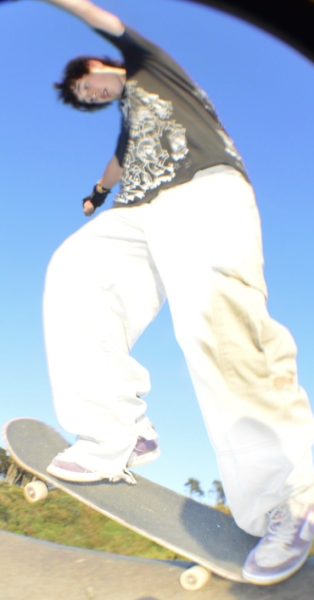
Sometimes, however, skateboarding isn’t just about fun. According to Yen, it’s also about conquering your fear and creating lifelong connections.
“Whenever I’m in a new environment, I’ll bring my skateboard with me,” Yen said. “I find that it can be intimidating to ask someone ‘hey, you want to hang out,’ but if you both skate, it’s a really easy way to connect. I’ve met a lot of friends that way.”
Skateboarding’s origins come from this community aspect. Surfers in Southern California built the first skateboards so that they could continue to socialize and do tricks, evenwhen the waves were flat.
“Skateboarding descended from surfing sometime in the ‘50s,” Yen said. “The first skateboards had wheels made out of metal that didn’t really turn much. When surfers didn’t have good waves, they would take their skateboards because the carving motion is very similar, and eventually that picked up speed.”
For many, California continues to be the epicenter of skate culture, but young people have brought the sport nationwide.
“California and New York definitely have some of the major hot spots in the United States,” Yen said. “These are areas that have a lot of youth culture. In cities like Los Angeles there are areas planned around skateboarding. In New York, it caught a similar vibe.”
As a result of the urban features and prominent culture, Yen especially enjoys going up to the city.
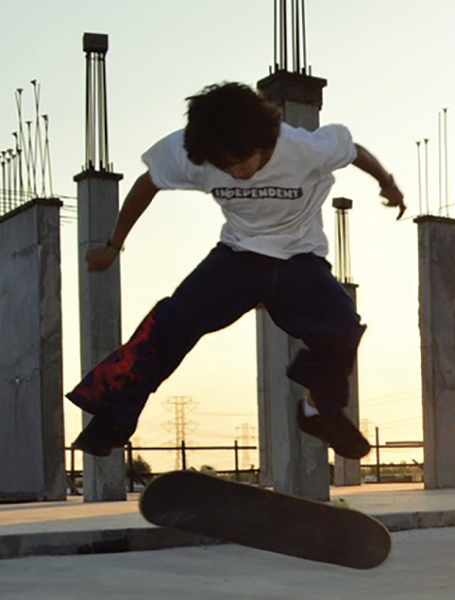
“I love San Francisco,” Yen said. “I’ll go up pretty regularly with my friends and we’ll skate around the Embarcadero area and around the Sunset District. That’s my favorite place to skateboard.”
Although Palo Alto may not boast the largest population of skateboarders compared to more urban areas, Senthil-Kumar said there are still many parks and areas to find other people to meet and skateboard with.
“I think Palo Alto has a smaller skateboarding community,” Senthil-Kumar said. “I’ve seen it a lot in the city, San Francisco, where almost everyone I know skateboards, because they have all the hills. I do know other people here that skateboard, and near where I live there’s the Greer Skate Park, so sometimes I go there and I’ll see people and that’s how I connect with other skaters.”
Through this strong community, skateboarding has changed how Yen faces challenges.
“I found what kind of person I am through skating,” Yen said. “I’m a rower, so whenever I’m having a really hard practice, I’m like, ‘Yeah, you know what?’ This is really not that scary considering I just threw myself down ten stairs last week. I found that I have more perseverance and I could do things that I thought I couldn’t do because skateboarding really puts a lot of things into perspective.”
Beyond the raw physicality of skateboarding, skateboarding has been a major influence on popular culture and style, drawing many to the sport.
“[In] the fashion world, baggy pants and just baggy clothing in general, has become really popular,” Yen said. “That’s like a gateway into skateboarding for a lot of people.”
The creativity Yen developed through planning out lines at the skate park extended into starting the clothing brand Puzzledwrld, which has amassed a following of over 6,000 on Instagram.
“I started my brand the summer before my freshman year,” Yen said. “I was scrolling on TikTok and I saw a video of this guy talking about where he gets all his blank T-shirts for his brand. I was thinking, ‘You know, it really wouldn’t be that hard to make some shirts.’”
Yen creates clothes with the skateboarding identity as the focus.
“A lot of my customers when I was first starting out were the friends that I skateboarded with,” Yen said. “I make clothes for skateboarders, because that’s the scene I was in. Today, a lot of my customers are skateboarders, BMXers or scooters, people in that whole sports world.
Along with his fashion brand, Yen also started a skateboarding club at Paly to unite the community of skaters around campus.
“[I] saw that there was a group of skateboarders at Paly and we all hung out,” Yen said. “I started the club as a way to bring people together.”
For Yen, skateboarding is unique in how diverse the community is compared to other sports.
“With [other] sports, there can be an age divide, or even in some cases, a race divide,” Yen said. “Skateboarding really crosses all barriers. You go to the skate park and you’ll see and be friends with a seven year old and a 70 year old, because you guys all have the same interest. So it’s a great way to connect with people.”
Senthil-Kumar says that anyone looking to start skateboarding should just go in and try, no matter what their first thoughts are.
“Try with any board and just start,” Senthil-Kumar said. “No matter how hard it is at first, I would say just keep on going. Try a little bit every day and eventually you’ll get the hang of it.”