She sits in the exam room, adamantly describing her pain as clearly as she can — sharp, persistent and an obstruction to her daily life. The doctor nods before turning to face the patient, only to utter the six words she dreaded most: it’s probably all in her head.
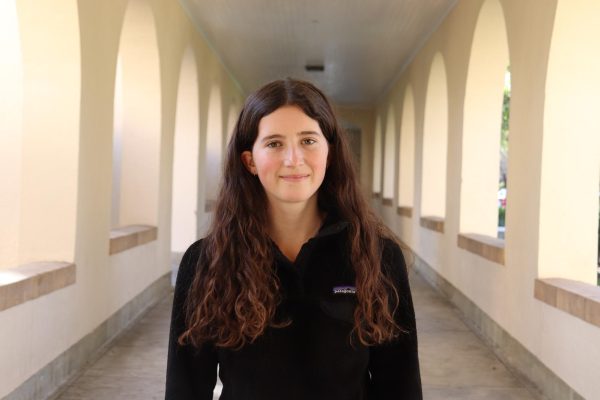
This hypothetical scenario echoes the real experience of women across the country who feel dismissed and unsupported by the American healthcare system — including Palo Alto High School junior Aurelia McKinney.
“A lot of my medical needs have been ignored, and the process to be able to even get what I need has been very difficult,” McKinney said. “It requires a lot of referrals and a lot of odd questions that you don’t want to answer because they’re embarrassing.”
 For patients like McKinney, feeling minimized by the healthcare system has been a significant obstacle in her path to a clear diagnosis and treatment plan. However, according to obstetrician-gynecologist Dr. Jennifer Lincoln, the situation is not only inconvenient but also dangerous.
“When women and men go to an emergency department for the exact same complaint, a man is
more likely to be seen sooner,” Lincoln said. “A man is more likely to be given pain medication if they’re complaining of pain, and a woman is more likely to be given anxiety medicine. When women try to speak up and get told it is anxiety, it can literally cost them their lives.”
A study conducted and published by the Proceedings of the National Academy of Sciences confirms that women wait around 30 minutes longer than men to be seen in an emergency department. In Lincoln’s experience working in the labor and delivery department, particularly during patient emergencies, half an hour can make all the difference.
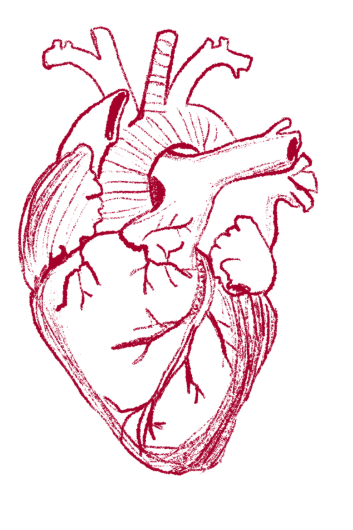
“When people come in with chest pain and go to the regular emergency department, there are protocols about how quickly they have to be seen, and they have to get an EKG [electrocardiogram, a diagnostic heart rate and rhythm test],” Lincoln said. “Sometimes, a pregnant woman will go to the emergency room. [The doctors] see that she’s pregnant, freak out and send her immediately up to us [OB-GYNs]. But just because she has a baby in her uterus doesn’t mean that we should bypass this protocol that we know can save lives.”
The mismanagement of heart attacks in women can be attributed to an overall lack of research in the field, according to Dr. Julia Fridman Simard. As an Associate Professor of Medicine in Immunology, Rheumatology and Obstetrics, Simard emphasizes the danger of this gap.
“Women don’t necessarily present with the same symptoms, but they are still having a heart attack,” Simard said. “[Since] they were sent home for having [an] anxiety or panic attack, there were really bad outcomes because they weren’t being treated. That’s because male bodies were studied, and the profile of what a heart attack looked like in a man was just assumed to apply to female bodies.”
However, this research discrepancy applies to many other areas of healthcare as well. According to a systematic review published in Neuropsychology Review, neurodivergent women receive diagnoses much later in life due to a lack of understanding surrounding how these conditions manifest in female brains. Paly junior Felicia Littke attributes this to a systemic gap when measuring symptom presentation.
“For autism and ADHD, the studies that they did back in the ‘80s were done on young white men,” Littke said. “Those symptoms don’t show up the same in girls, so they’re misdiagnosed or undiagnosed.”
Yet, these research gaps were not accidental, according to Monica Lefton, communications director at the Society for Women’s Health Research (SWHR).
“There were actually federal guidelines that came out before 1990 that said that [medical research trials] shouldn’t include women, specifically of childbearing age, because of the fear of adverse effects from research,” Lefton said. “We now know it’s extremely safe to do research on women, including women of childbearing age, and in some cases, including pregnant women.”
To Simard, a major factor in the decision to exclude women from medical research stems from a larger scientific culture with a tendency to view female bodies as an unpredictable variable.
“There was this idea that studying men and male bodies got around the complication of having to deal with [women’s] fluctuating hormonal cycles that we didn’t really understand,” Simard said. “Those were just things that were going to complicate the research, because we [didn’t] know how to account for them. Overwhelmingly, even in clinical trials for treatment for conditions that affected both men and women, they would mostly recruit men.”
This historical prioritization of male-centric research continues to influence the uneven understanding of women’s health in society today, according to The Thatcher School junior Elle Feira.
“People seem to misunderstand the drastic difference and inequity in research surrounding women’s health despite so many of these underresearched issues being so common among many women,” Feira said. “It feels as though, for any well-understood issue surrounding a woman’s body, there are two surrounding a man’s.”
This gap in understanding is further reinforced by the narrow framing of public perception of women’s health, often reduced to a stereotypical image of issues relating to menstruation and pregnancy. This limited view overlooks a broader range of conditions that disproportionately affect women, such as the autoimmune diseases lupus and multiple sclerosis. Nearly 50 million Americans have an autoimmune disease, and four-fifths of that group are women, according to a Stanford Medicine-led study.
“We know from lots of different studies that there seems to be a predisposition that biological females are more likely to be diagnosed with an autoimmune disease, particularly something like systemic lupus, than a biological male,” Simard said. “These health disparities have to do with biological differences or social factors, or a combination of the two.”
While recognition of these diseases has grown over the years, it has not always translated into immediate changes in medical research practices.
“It wasn’t until relatively recently [in 2014] that the National Institutes of Health released this new requirement that you had to talk in your [research] grant [about] how you’re going to consider sex as a biological variable, the idea being [that people] can’t just keep studying only men,” Simard said.
While this mandate is a prominent step forward in reversing decades of misinformation and a lack of research, many women still feel the effects of this clinical gap in daily life.
“There are so many things that we’re doing … that are intended for male bodies and aren’t good for our bodies,” Littke said. “For example, the diet that’s recommended to the average person is what’s good for a man. I’m not necessarily saying that that diet is wrong, but there’s just not enough research to show the difference.”
Women’s health struggles stem from more than just being under-researched — the roots lie in a lack of education, according to Lincoln.

“What’s really sad is that I see a lot of very basic gaps, and you can tell people were not taught how their body works,” Lincoln said. “I see people who can’t or would not be able to verbalize what a normal menstrual cycle is. They were never taught, [and] they internalize shame [when] they can’t ask about it.”
While Lincoln is used to seeing these disparities in a professional setting, this experience is common for students like Littke as well.
“The majority of girls that I know don’t necessarily even know the four names of the cycles in the period, and they don’t understand the different things that come along with [that],” Littke said.
This striking lack of reproductive health literacy inspired Lincoln to take matters into her own hands. Alongside her clinical practice, as of April 15, Lincoln has amassed over 2.8 million followers on TikTok, with a platform providing approachable women’s health education and reducing the stigma around complex medical topics.
“I wanted to be a source of evidence-based information that also felt like you were just chatting with a friend,” Lincoln said. “I was a product of an abstinence-only, shame-based education. I went to Catholic schools all my life, and I got [sexual education] from a nun, so I really wanted to educate the teenage version of myself.”
Lincoln’s experience has made her aware of how confusing the female body can be to those who have not received adequate education about it. And as a content creator, she has seen how quickly that confusion can spread on social media.
“There’s a lot of misinformation on social media that tends to go really viral about the extremes, like that birth control will kill you or it will give you cancer,” Lincoln said. “There’s no nuance[d] discussion.”
The misinformation surrounding birth control is particularly convoluted, as it remains a topic many women — especially teenagers — already harbor confusion about.
“Birth control is so complicated,” Feira said. “It has genuine short and long-term effects on the female body, and I don’t like that it’s understood to be a uniquely female responsibility.”
Despite never being on birth control herself, Feira feels as though she is one of the few people who are well educated about the medication.
“I’ve received enough information to make an informed decision, but I have talked to so many people that haven’t and do not understand the consequences and risks that come with [being on birth control],” Feira said. “I wish people cared and fought more regarding the fact that the responsibility of birth control falls mostly on the woman.”
Even for young women who have experience with birth control, any truly effective path can be hard to find.
“During freshman year, I was having very irregular periods, which happens to a lot of girls when they’re adolescents,” Littke said. “I went to the doctor to ask them for help to fix this, and essentially they told me that they didn’t have much [of a] solution for it, other than that they could put me on birth control.”
Despite being a proposed solution, in Littke’s experience, birth control only served to worsen her symptoms and the way she felt.
“I took [birth control] for a month, and it didn’t do anything to regulate my periods,” Littke said. “It just made me feel sad all the time, and it made me feel very helpless and frustrated that there was no better solution for me.”
Littke’s struggle to find effective treatments, and the distress that accompanied it, is not an uncommon reality for women as a whole.
“It definitely does not feel good when it feels like a system isn’t geared towards you and it’s really impacting your well-being,” McKinney said. “There are women who have severe depression or mood swings or other ways that they feel like they are out of control in their body, and they can’t get help, and that’s a really bad feeling.”
While the healthcare system is a major propagator of the collective sense of dismay among women who feel unsupported by their doctors, it is not the only culprit. Many of the assumptions embedded in these institutional gaps are also reinforced by interpersonal relationships and social expectations among women themselves.
“It’s so internalized that we should just endure, as if the fact that we’re bleeding and we’re hurting is just what makes you a woman,” Lincoln said. “That gets passed down from mothers to daughters, and we just tell each other that this is the price of admission.”
Littke has observed this problematic pattern of minimizing women’s medical experiences firsthand.
“Just the other day, I was listening to a woman tell her friend about how she had to beg her doctor to be able to give her the resources she needed to deal with her menopause,” Littke said. “She eventually had to switch doctors because the doctor was basically just telling her to tough it out.”
Incidents like this are hardly isolated; rather, they reflect a broader theme of female suffering being downplayed and dismissed in both clinical and everyday contexts.
“So many women go to work, they go to the gym [and] they go through their daily lives in terrible pain,” Littke said. “If they are to complain at all, it’s dismissed as insignificant and as if they’re exaggerating — when in reality that diminishing of the problem is very condescending and misogynistic.”
There is a clear feedback loop between how society expects men and women to respond to pain and how society responds to men and women expressing that pain. These stereotypes are not only damaging but also dangerous when placed in a medical setting.
“There is more so a culture of pushing through [pain] among men, versus the opposite form of understanding and care towards health issues among women,” Feira said. “This may affect decision-making, as a doctor may believe a female patient is just playing up symptoms or being too quick to seek help, stem[ming] from the belief that women are ‘too emotional’ or do not endure much pain before seeking help.”
The societal portrayal of women as overdramatic and fragile has existed for centuries, according to Lincoln.
“When you look at the Greek root of the word [hysterical], ‘hyster’ means uterus,” Lincoln said. “Back in the day, [ancient Greeks] thought that all of [women’s] problems were caused because our uterus was wandering around our body. They attributed everything to us being crazy because we were hormonal.”
Unfortunately, Lincoln has witnessed these deeply flawed stereotypes continue to persist in recent years.
“Many people still think that women are very weak, and that we’re overreacting [when expressing a medical concern],” Lincoln said. “I would just ask people who think [they are weak] to spend ten minutes with me on labor and delivery [and to] watch a woman give birth unmedicated, look me in the face and tell me women are weak.”
Misconceptions like this directly impact the prioritization of available women’s healthcare. Lincoln sees limited access to adequate care as a critical factor in how women grow to perceive their own health concerns.
“Even if there is a specialist in your area, you might have to wait six months to a year to get in,” Lincoln said. “We just sort of internalized the idea that, ‘well, I guess it’s not that important.’”
This feeling of minimization does not simply go away when a woman finally gains access to care; in many cases, it is actually reinforced within the exam room.
“If you’re just going to tell us we need to lose weight, it’s in our heads [and] that our labs are normal — why would anyone keep looking for care?” Lincoln said. “[Because of this, patients] put it off, then they develop cancer or infertility, the very condition that could have been prevented.”
In some parts of the country, it can be difficult for a woman to secure a doctor’s appointment with a women’s health specialist. In others, it is nearly impossible.
“There’s something called a maternal healthcare desert, where there’re no OB-GYNs, no midwives, no birthing centers or labor and delivery,” Lincoln said. “About one-third of all U.S. counties are maternal healthcare deserts. 50% of U.S. counties have no OB-GYNs. From 2010 to 2021, the percentage of Americans who live within 30 minutes of obstetric care went from 90% to 60%.”
While access to women’s healthcare remains uneven nationwide, specialty clinics like Radiant Women’s Health in Menlo Park have ensured that women in the Bay Area have adequate resources to navigate all of their medical needs, as explained by Trevina Oats, the Care Coordinator and Membership Liaison.
“We offer unlimited visits to our members, as well as guarantee same or next day appointments,” Oats said. “That is really comforting to patients, knowing that they’re able to get in when they need to.”
Oats has observed firsthand that this bedside manner is not the standard in every medical setting.
“Coming from a different GYN practice, the appointments there were 10 to 15 minutes long, and back-to-back,” Oats said. “[Many traditional clinics] really treat patients like a number instead of someone you have a relationship with and provide ongoing healthcare for.”
Founded by Jessica Kassis, a Stanford-trained OB-GYN and menopause specialist, Radiant Women’s Health was initially established to address a striking lack of menopause support available to middle-aged women. Now, it hosts an array of trained physicians in various fields to meet the needs of women across all stages of life.
“Radiant Women’s Health was designed to be a one-stop shop for women to receive comprehensive, evidence-based and compassionate care,” Oats said. “We’re accomplishing this by bringing together various specialties under one roof or truly connected care. We have primary care, gynecology, pelvic floor therapy, nutrition and endocrinology.”
Beyond clinical care models like Radiant Women’s Health, organizations such as SWHR work to address gaps in care through research and institutional advocacy.
“Our policy team works really closely with communicating with lawmakers to make sure that there is robust funding, not only for women’s health specific topic areas, but also for public health at large,” Lefton said. “[We make] sure [agencies] like the National Institutes of Health, the Centers for Disease Control and Prevention and more are receiving ample funding from the government each year so that they can continue tracking and doing research.”
This focus on funding is instrumental in directly shaping the scope and quality of research on women’s health. For students like McKinney, research is an essential step forward in addressing systemic gaps — but only half of the ideal solution.
“When you have more women in your population for research and more research geared towards women, you are more conscious of what’s going on and can figure out these problems much easier,” McKinney said. “It can be hard when [researchers] aren’t experiencing or don’t understand [these conditions], so having wider information to the general public is also really important.”
SWHR aims to meet the need for accessible information by ensuring that reliable education is easily accessible.
“All of our resources are completely free to download, use and share on our website,” Lefton said. “Nothing is paywalled. We’re really adamant about making sure that you never have to share personal information or sign up for emails to get our resources, because there’s already so many barriers to the women’s health ecosystem.”
While organizations like SWHR have done substantial work to address these barriers, Lefton affirms that there is always further advocacy, research and education to be done in order to level the playing field for good.
“We know that we’re working against a historic gap and already starting three steps behind,” Lefton said. “There are a lot of facets addressing the women’s health gap and solving it, and, like every good social issue, it’s going to take the work of everybody.”
Collective action is not limited to the work of policymakers and institutions. In fact, student-led, community-based efforts have produced incredibly meaningful results in furthering the cause. Junior Zoya Prabhakar, the co-president of the Paly Women’s Health Club, highlights the success the club has seen when promoting puberty and menstrual education through local efforts.
“This year, we hosted a drive where we got together a bunch of hygiene items and made care kits that we distributed to nonprofits and underprivileged girls who don’t have access to the same supplies that we do,” Prabhakar said. “It fosters a really good environment within Paly, where a bunch of girls can just come together.”
Efforts like those of Paly Women’s Health Club and similar organizations highlight the variety of pathways possible to enact change, even as larger systemic problems remain.
“A full change wouldn’t be feasible in the short term, but meaningful progress could happen in so many ways,” Feira said. “There are so many small changes that could have really impressive benefits.”