Time capsules to the Civil War line the walls of room 801. It is Presidents Day Weekend 2002, and social studies teacher Stephen Foug is repurposing a photo book he was gifted, filled with black and white pictures from the New York Times. After a weekend full of printing photocopies, cutting them out, and gluing them to gray poster boards, Foug created posters that serve as time capsules along his walls, welcoming his students every day, and creating a historical environment where his students can learn best.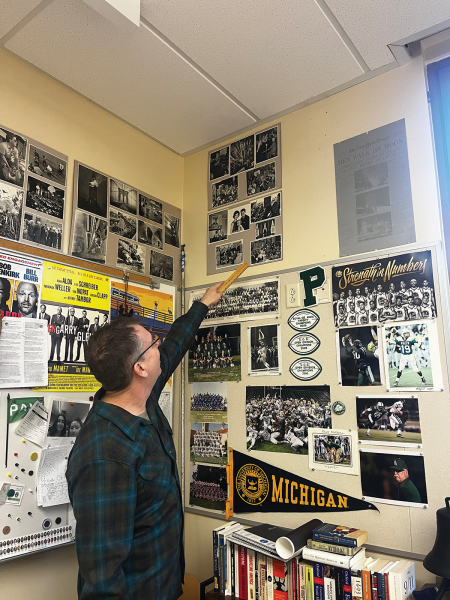
While this was a fun arts and crafts project for Foug, its impact goes beyond just testing Foug’s creative abilities — its purpose was to create a welcoming classroom. According to a 2022 Qualtrics survey of over 1,000 high school students, only 38 percent of students said their school felt welcoming. Junior Oakley Koegler appreciates Foug’s effort to create a welcoming environment.
“Mr. Foug does a really good job of incorporating the many posters he has in his class[room] into his lessons and treats them with passion,” Koegler said. “[They help] to make the atmosphere of learning much more inviting.”
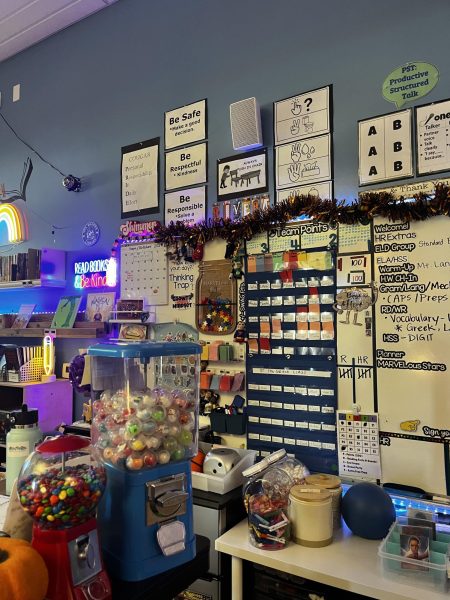
In each classroom, teachers are presented with an open canvas of wall and whiteboard; the creativity falls on them to decorate as they please. At Costano Elementary School in East Palo Alto, fifth-grade teacher Jesusita Rivera’s classroom incorporates her love of superheroes to make a homely environment for herself and her students.
“It’s my home eight hours a day,” Rivera said. “It’s their home, too. I want them to feel that when they walk in.”
That wanted feeling of welcomeness is one that sophomore Lucy Y’Barbo feels as she enters her classrooms.
“They [decorations] make learning more engaging and create a wonderful, happy environment where learning is productive and fun at the same time,” Y’Barbo said.
What’s special about teachers being able to decorate the way they want is that their classrooms often reflect parts of the teachers’ lives as well. Often, small decorations can have the biggest meaning for the teachers. For example, English teacher Hunter Reardon has many sentimental trinkets filling his room.
“I have a small throw pillow with a fabric map of Santa Barbara County printed on it,” Reardon said. “It is one of the few reminders I have in my classroom of where I grew up [Lompoc, California]. It reminds me daily of how different Palo Alto is and how lucky I am to live and work in this community and with such amazing people, students and colleagues alike.”
Reardon is not the only teacher who carries memorabilia along with them. Most teachers likely have a poster, object or plaque that means a lot to them. One of these people is Associate Student Body (ASB) director Alyssa Bond, who mixes aspects of herself in her decorations.
“My goal in putting up these decorations was a mix of self-expression and creating a welcoming environment,” Bond said. “One corner of the room serves as a reflection of who I am — a chance for students to get to know me through what’s on the wall.”
And while this open canvas is shaped by the current teacher, Bond likes to represent the past teachers who put in their time and effort into making it a home.
“I honor the old decorations from past years as a way to acknowledge our shared history, while adding new and meaningful pieces throughout the year to represent what’s important to our current community,” Bond said.
Bringing in memorabilia from their lives and using previous decor serves as a way for teachers to save money, since many teachers take from their own pockets to create the current look of classrooms, such as Foug’s time capsules or Reardon’s decorations.
“I have paid for the overwhelming majority of these items myself, probably 95%,” Reardon said. “
They aren’t expensive, and I enjoy the process of shopping for and purchasing the items I want.”
Another method teachers can reduce expenses is by showcasing their students’ work on the wall as a way to add to the aesthetic appeal and represent their students. Not only do students leave their mark on the school and their peers, but now that impact can be reflected on the walls.
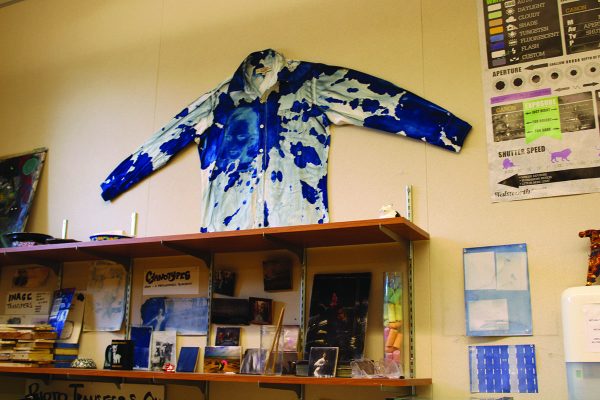
“Students are reflected in the posters they made, pictures of themselves and their peers, shirts they’ve designed, sign-ups for ASB duties and in the controlled chaos of the room,” Bond said.
Students have a huge impact on the look of classrooms, from the artwork on the wall to the projects on the windowsills. ASB President Katie Kim said that seeing her work exhibited in her classrooms makes her efforts feel valued.
“I have designed shirts that hang in the classroom as well as some posters that have been seasonally displayed,” Kim said. “It makes me feel like I have an impact and that the work I do is worth displaying.”
Similar to Bond, photography teacher Kenna Gallagher recognizes the energy that goes into their students’ work and likes to honor it by displaying it in their classroom.
“I like to give everybody a shot,” Gallagher said. “Sometimes art is not somebody’s forte, but they put a lot of energy into it, and that comes through in their super weird art. I appreciate that.”
Students’ unique art, among other posters and decorations, contributes to the inclusive environment Gallagher creates.
“I want them to feel comfortable to be exactly who they are, and I think my chaotic, eclectic style means there’s something for everyone,” Gallagher said.
As showcased in Gallagher’s classroom, putting up art and posters is a recurring aspect commonly found in classrooms from elementary school through high school.
For example, Rivera puts up her students artwork so others can learn and visualize what they know about it in class. She puts them up on a clothesline going across the classroom.
Many elementary schools are filled with childhood illustrations and icons, such as colorful artwork and walls. However, as kids grow up, so do the decorations. A common theme found in Paly classrooms are college pennants to either represent the teacher’s background or reflect past students’ journeys. Science teacher Samuel Howles-Banerji encourages this, but worries about the other implications they evoke.
“I worry that it [putting up pennants] perpetuates the pressure that students put upon themselves to perform at a super high level,” Howles-Banerji said.
This concern opposes his goal to create a welcoming environment.
“I’ve always wanted my classroom to be a space where students want to be, so that motivated me to take the time to make it more welcoming,” Howles-Banerji said.
That said, Howles-Banerji is one of the many Paly teachers, primarily in the math and science buildings, who have to share classrooms and rotate each period. This limits the opportunity to express themselves and create the classroom environment that they would otherwise want. Senior Cailey Quita noticed the unique space these classrooms create.
“Science classrooms are designed for safety and experiments,” Quita said. “Because some teachers share this space, they don’t even get to fully make the classrooms their own… I think that personal connection really makes a big difference in how welcoming a space feels.”
But, just because these classrooms are different doesn’t mean there’s no room for creativity — Howles-Banerji took his students’ advice that his windowless classroom, which is used during the PRIME period, was “small and depressing” and took it as motivation to spruce things up.
“I took the time finally to tailor that space to make it more inviting,” Howles-Banerji said. “I found some frames for posters and rearranged how the Science Olympiad trophies are displayed.”
Similarly, Reardon, who uses one of the English classrooms nested deep in the building, embraces the windowless aspect of his classroom as it gives him the chance to experiment with lighting.
“I can’t forget the ‘vibe creators’, such as the use of lamps instead of the 1970s hospital-esque fluorescent lights built into the ceiling,” Reardon said. “The low, warm light completely transforms the space and creates a slow, peaceful atmosphere.”
While Reardon’s classroom is unique for having no natural light, the TLC is a perfect example of a very different space; located in the Tower Building, it has huge windows, exposing it to vast amounts of light.
“The TLC feels so cute and welcoming, partly because it’s different from a traditional classroom,” Quita explains. “It’s warm [and] bright, it has these big windows and it has these chandeliers that give it this old library vibe, but it still feels really modern and comfortable … I feel like [the lighting] just changes the whole mood of the space and makes it feel more alive and less like a typical classroom.”
Similarly, junior Alana Chun often notices the low lighting in her classrooms.
“I really like it when classes have different sources of lighting instead of just super bright white lights,” Chun said. “They make the class feel more inviting and ease the stress of a classroom environment.”
From small details to lighting, there is so much that can be put into creating a pleasant classroom. These rooms are a fusion of the past teachers’ efforts, current teachers’ lives and their goals for the atmosphere of
the classroom. For Quita, it’s easy and heartwarming to see the impact of a welcoming environment through the TLC.
“It’s actually a place where I want to be,” Quita said. “Whether I’m studying, talking to Ms. Lee, asking to get tutored or just hanging out during study hall, I love being in there.”
It is clear that the classroom environment shapes both students’ and teachers’ moods. When building these environments, the effort Paly teachers put in does not go unnoticed.
“Because students spend so much time in classrooms, it’s really important that you feel comfortable and can learn in them,” Koegler said. “This is one of the reasons why I think Paly teachers are so great because they really care about their students and try to make their classrooms feel as comfortable and appealing to learn as possible.”