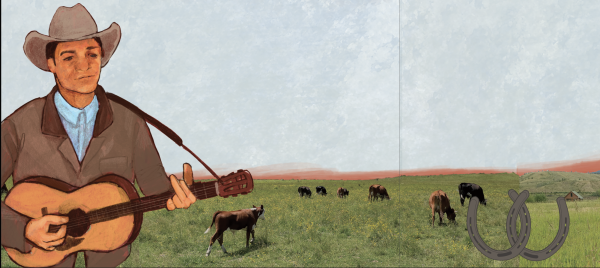

As Mia Wilhelm, a cyber security engineer based in Denver, walks by the horses grazing on the pastures of her Northern Colorado home, the history of the American West is evident across its rugged landscape. Wilhelm stays in a cabin on land which was ranched by her grandfather, David Wilhelm. Cattle and cowboys have shaped the tradition of the surrounding area. All around her, hardworking Americans work the land, carrying on the tradition of their forefathers.
“Our neighbor wakes up at 4 a.m. year-round to feed the animals and start his day, he’s on his feet, moving until 7 p.m. when he stops for dinner and goes to bed,” Wilhelm said. “To me, that’s what is representative of cowboy culture: work ethic, having a really strong identity in being close to the land, being self-sufficient and having pride in the work that you do.”
That spirit of the American West is embodied by artists who preserve and share the culture, such as Andy Hedges — a songster, reciter, storyteller and guitarist of cowboy songs and poems. Hedges has performed at the Grand Ole Opry and at Carnegie Hall, as well as hosting a podcast, Cowboy Crossroads, where he interviews fellow musicians.
 Hedges, described as the “future of the tradition” by legendary cowboy poet Waddie Mitchel, developed a love for the music of the American West during his childhood in Tokio, a small West Texas town 60 miles southwest of Lubbock.
“My dad was a bull rider before I was born,” Hedges said. “By the time I came along, he had become a preacher, but I grew up with my dad’s rodeo stories. We lived in the country. We paid rent on a little house, look[ed] after a small herd of cattle and we always had a couple of horses around. I grew up around that, and with my dad’s interest and passion for all things cowboy and Western.”
Throughout his childhood, Hedges listened to his father’s extensive cassette collection of cowboy music legends, including legends like Tex Ritter and Gene Autry. This early introduction to the sonic traditions of the American West laid the foundation for Hedges decades-long interest in cowboy art and culture.
“When I was 13, I saw an episode of Austin City Limits with Michael Martin Murphy and friends,” Hedges said. “I was really mesmerized by the whole thing. Until that point in time, I didn’t know that there were still people who played that old western music and cowboy music that I’d grown up hearing, and that was really the moment that I think I felt the call, so to speak.”
Soon after that, Hedges began teaching himself to play the guitar, memorizing old cowboy poems and picking up any songs that he could.
“When you look at the very beginnings of what we would call the American cowboy, it was these really young men who were doing this job that had never been done before,” Hedges said. “This job of trailing cattle from Texas to railheads up north was a really dangerous job. It was a really exciting job. And they brought their music with them.”
For Hedges, cowboy music is special because of its unique American mix of sounds and traditions.
“It [cowboy music] was old English, Scottish and Irish ballads, and they were changing the words to become cowboy songs,” Hedges said. “It was African American cowboys recently freed from slavery, who were bringing the music that would eventually become the blues. And it was the Mexican vaqueros bringing their music and especially their language that influenced all of the terminology of the cowboy. And then all of that came together to kind of form what we would call cowboy music.”
The musical Cowboy tradition came from the real people working with cattle and living in the West.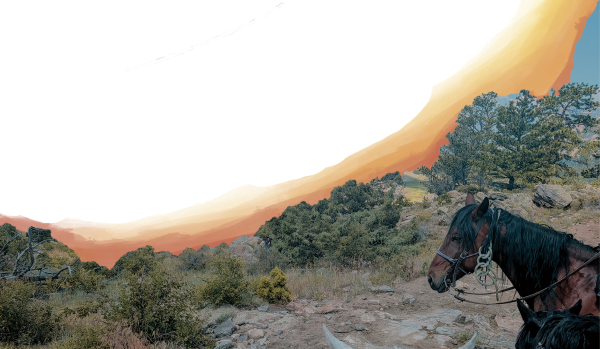
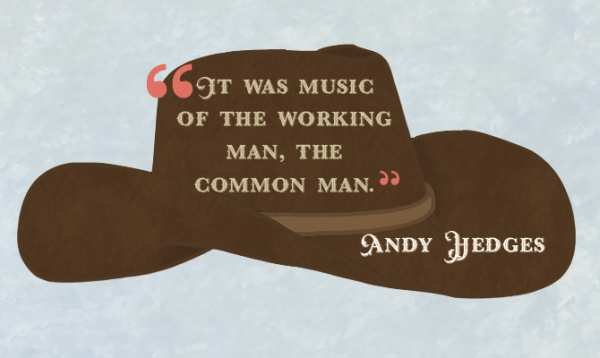
“It was music of the working man, the common man,” Hedges said. “It’s folk music, and it’s handed down, and it’s passed around. I think that’s important, because it’s more representative of more people. It’s not music that was just made by some elite group somewhere that nobody else could relate to. It’s the real deal.”
Beyond the honest lyrics and melodies, cowboy music itself serves a purpose, enriching the lives of people working long days and nights, moving cattle.
“That kind of music also serves a function: it’s for entertaining,” Hedges said. “But it also might be a work song. It might be a song that was sung to soothe the cattle at night, keep an important story alive [or] it might be a way for the news of important happenings to travel.”
Because of these varied uses, folk music evolved to become independent from its ranching origins.
“Folk music of the people is really powerful and just sort of has this life of its own,” Hedges said. “I don’t know if it makes it better than higher forms of music, but it certainly makes it unique, and I think it’s one of the reasons people find it so fascinating.”
Because of its unique cultural value, many work to ensure it is not lost. As the former state folklorist of Utah, Hal Cannon took on the responsibility of preserving the traditional cowboy sound and art forms, especially because the music came from humble, often overlooked, roots.
“A lot of people weren’t recognized for their artistry, their skills and for what they had to contribute,” Cannon said. “There was a real big emphasis on the fine arts and formal knowledge, like being in the orchestra, being in the chorus or studying music that’s written down and comes from high society. I was interested in doing projects that would acknowledge, praise and validate, as best as I could, people whose talents came up in the grassroots, from all parts of society.”
Cannon recognized that the music world was changing and these cowboy traditions were at risk of being lost.
“Back in the early days, you’d find different styles that had emerged because there wasn’t mass media,” Cannon said. “I felt like some of the job of being a folklorist was documenting these older traditions that were going away.”
Cannon is also the founding Director of the National Cowboy Poetry Gathering in Elko, Nev., a week-long celebration of the creativity and art of the Cowboy West.
“We thought we were just having a one-time event, but people came to that event and heard these cowboy poems, and heard this cowboy music, people just wanted more,” Cannon said. “It was almost a spiritual thing for people.”
Since the first Gathering, Hedges has become a long-time performer and attendee at the National Cowboy Poetry Gathering and describes it as a modern revival of cowboy music.
“There’s a whole world of people who are singing the music and telling the stories, who are rooted in the real working West,” Hedges said. “There is a vibrant community ranching, cowboying and interested in the life, culture and history.”
These gatherings are a way to read, sing and celebrate many aspects of cowboy culture, including poetry.
“Cowboys like all sorts of poems and they don’t always write about horses, about cows and about the life,” Cannon said. “They might write about their experience as a veteran, for instance, because a lot of cowboys have been veterans, or they might write a love poem, and so the lines are not drawn. But generally, we’ve always felt like the best Cowboy Poetry was the poetry that came from real-life experience.”
Some believe the authentic character of cowboy poetry and traditional music forms have been lost in modern interpretations of the Western genre.
“Western [music and poetry has] become taken over by the Hollywood singing cowboys who were inspired by real cowboy music,” Hedges said. “They took on this romanticized, mythological view of the West and their songs, and the songs they wrote were very beautiful, but not very authentic. There’s not a lot of country or Western to it. It’s just become another form of pop music.”
This disconnect between country music and its Cowboy origins stems from the labelling of the Country and Western genre.
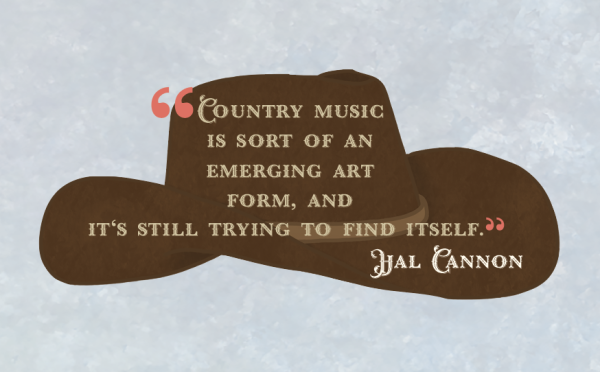
“For a long time, people would say it’s Country and Western music,” Cannon said. “They’d say those words together, and that’s sort of been dropped; things have homogenized. Now there’s more than [just] urban country music and rural country music. It’s an amalgam of rock and roll and all sorts of different influences. It’s really not what it once was, and that’s fine. Country music is sort of an emerging art form, and it’s still trying to find itself, now it’s sort of fragmented.”
Despite country music’s drift from its cowboy roots, its sound is enjoyed by many as a connection to the American landscape. For senior Sofia Singer, country music is the soundtrack to joyful moments.
“I love to sing, and country music is really fun to sing,” Singer said. “Most of the songs make me feel happy and a lot of them are very emotional. To me, country music reminds me of a sunny day driving in the hills.”
Regardless of country music’s evolution, some themes of the traditional cowboy lifestyle continue to appear in modern country songs.
“The image is [widely] held that a lot of so-called country artists still wear boots and still wear cowboy hats, and so that’s kind of a nod to their roots, whether they realize it or not,” Hedges said.
Many of these blue-collar symbols have become co-opted by popular media, with several items of the cowboy lifestyle turning into trends. Wilhelm describes how she feels about the traditional cowboy workwear being considered fashionable.
“I used to be annoyed by those things being stylish items, luxury items or things like that,” Wilhelm said. “It’s probably a misappropriation of that culture to a large degree, but I also feel like, even if it’s a misappropriation, it is a form of flattery in a lot of ways that people are recognizing the work ethic.”
Work ethic is crucial to both cowboy culture and music, reflecting the deep connection between cowboys and their land. Because of that connection, there is strong camaraderie shared among the community.
“A man doing what he says he’ll do and a handshake [is] just as reliable as any contract,” Hedges said. “The work ethic of the American ranchers and farmers is so incredible and admirable, and also a respect for the land, respect for the horses and livestock and a respect for one another.”
Despite the culturally rewarding experience of ranching and the community between ranchers, it is not always economically ideal. Wilhelm spends time at her family ranch in Colorado with neighbors experiencing the effects of this struggle.
“It’s just a really hard economic model, and it’s hard to be profitable,” Wilhelm said. “The profits you can see look huge at a time, but again, you also have a million dollars in capital that’s almost illiquid.”
Despite difficult economics creating an uncertain future for the cowboy way of life, there are still many ranchers who undertake it. These people are the ones keeping the traditions alive.
“There’s still many, many men and women who make their living on horseback tending cattle, and who make their living ranching,” Hedges said. “We’re still feeding the country and feeding the world, producing beef in the American West, and those traditions are very much alive and well, but it’s also very much threatened by development.”
The challenge of preserving the traditional Cowboy way of life in the American West has been prevalent since its advent.
“From the beginning of music that came from life on the American frontier they’ve always lamented the passing of the West” Hedges said. “Even in the 1870s, they knew that what they were seeing would not last forever, that it was going to change so quickly. The trail driving period was very brief, the open range period ended very quickly, fences went up, settlements and the buffalo were slaughtered and the trail drives ended. There’s been continual change and industrialization happening since the very beginning, but it’s also stayed alive.”
By using his podcast, Cowboy Crossings, Hedges has advocated for continued preservation of Cowboy culture. His focus on the culture and tradition of ranching communities and Cowboys draws a diversity of listeners who connect to and appreciate the rich Cowboy culture.
“I produce a podcast and I interview old ranchers and working cowboys and fellow musicians and poets,” Hedges said. “I have a lot of people who listen from urban areas. People crave that connection to the land, to livestock and to our history. There’s various reasons people are drawn to it, but part of it is because this is a rich and interesting culture, and the art that we produce is really engaging. It’s really compelling, whether it’s the music or the poetry of the literature or the visual art of the American West.”
In response to the desire to connect to life in the American west, Cowboy Kent Rollins creates YouTube videos and has published two cookbooks which carry on the cowboy cooking tradition. Rollins lives on a ranch in New Mexico and he shares his culture through showing others how to cook classic and hearty cowboy dishes using a Studebaker Chuck Wagon.
“A lot of chuck wagon cooking and cowboy food has deep roots in necessity and resourcefulness,” Rollins said. “I try to keep those traditions alive by cooking them the way they were meant to be cooked, over a fire, in cast iron and with a little history behind the meal.”
The future of cowboy culture — as well as many other things — is reliant on keeping the values and stories alive.
“I think the future of cowboy culture depends on whether we keep passing the stories and the values along,” Rollins said. “The good news is there are still a lot of ranchers, horsemen and working cowboys out there living that life every day, and there are a lot of folks who are curious about it and want to understand it. As long as we keep sharing the authenticity of the cowboy through history, skills and traditions, the cowboy culture will stay alive.”